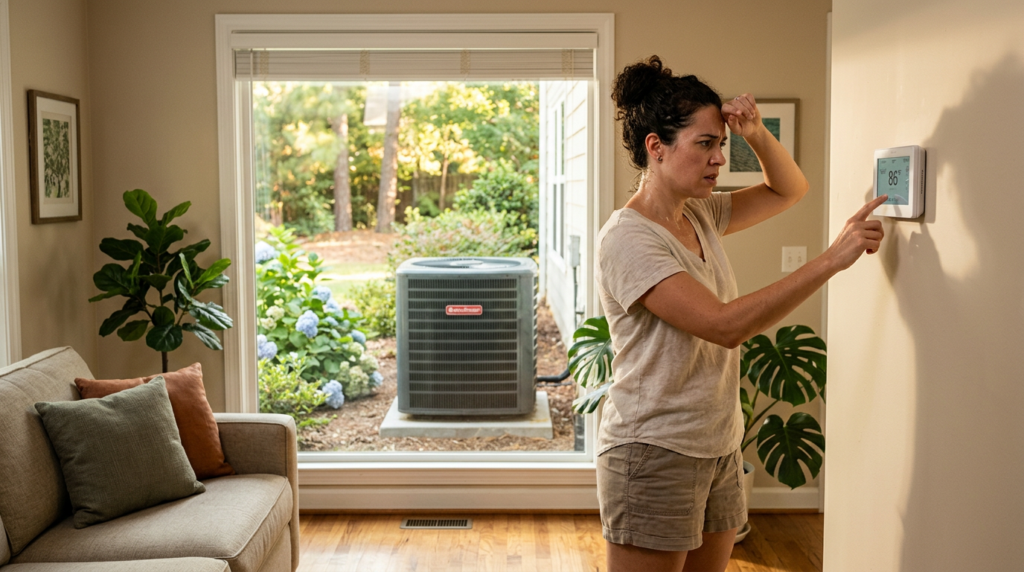
It’s 4:00 PM on a humid July Tuesday in Georgia, and your living room feels more like the Varsity parking lot than a sanctuary. You’ve nudged the thermostat down to 68, but the air coming out of the vents feels lukewarm at best, and the humidity is making your skin feel like a glazed donut.
Before you panic and call the first “Big Box” HVAC company you see on a billboard, take a deep breath. In the world of Georgia summers, some cooling issues are simple enough to fix yourself with a little bit of neighborhood know-how. This guide walks you through the essential checks every Atlanta homeowner needs to know to stay cool without getting overcharged by a high-pressure salesperson.
Is Your Thermostat or Power Supply the Culprit?
The first thing any pro will tell you is to check the simplest point of failure: the brain of your system. Many first-time homeowners in neighborhoods like Kirkwood or Grant Park call for help only to find out their settings were adjusted by a curious toddler or a wayward Wi-Fi update.
Thermostat Settings and Battery Health
Start by verifying the “Auto” vs. “On” setting on your wall unit. When the fan is set to “On,” it keeps blowing air through your house even when the outdoor compressor isn’t actually cooling. In our climate, this just circulates humid Atlanta air and can make the house feel swampy. Setting it to “Auto” ensures the fan only runs during a cooling cycle.
Next, check for low battery indicators. If your screen is flickering or the display looks faint, it might be losing its connection with the air handler. It is also worth noting that your programming might be working against you; many people set “away” schedules that let the house get too hot, making it impossible for the unit to catch up once the sun hits its peak. You might want to reference this study on thermostat behavior to ensure your programming isn’t accidentally creating a heat trap in your home.
Tripped Breakers and Blown Fuses
If the thermostat looks fine but nothing is happening, head to your electrical panel. Look for a switch that is “halfway” between the on and off positions, specifically the one labeled for the AC compressor or condenser. Sometimes a power surge during a classic Georgia afternoon thunderstorm can trip the breaker without fully flipping it.
If the breaker trips again immediately after you reset it, stop and contact a professional for HVAC in Atlanta to avoid causing permanent damage to your compressor. Don’t forget the outdoor disconnect box located near your condenser unit; this box often contains pull-out fuses that can blow during extreme heat. While replacing a fuse is a DIY task, understand that a tripped breaker often points to a deeper electrical issue or a failing capacitor.
Are Your Air Filters and Coils Choking the System?
Airflow is the lifeblood of your air conditioning system. If the air can’t move, the heat can’t be removed from your home. This is the most common reason for service calls in the metro area, especially during the transition from spring to summer.
The Impact of High Georgia Pollen on Filters
Atlanta is famous for its “pollen-pocalypse,” where everything turns a dusty shade of yellow. That same pollen gets sucked into your return vents and can clog a standard filter in half the recommended time. If you haven’t changed your filter since the dogwoods bloomed, it’s likely suffocating your system right now.
However, be careful with those “high-efficiency” filters sold at big-box hardware stores. While they catch more dust, they also make it much harder for your blower motor to pull air through. There are 7 reasons filters don’t improve indoor air quality the way marketing suggests, and a filter that is too thick can actually cause your system to overheat and shut down.
Evaporator Coil Freezing and Thawing
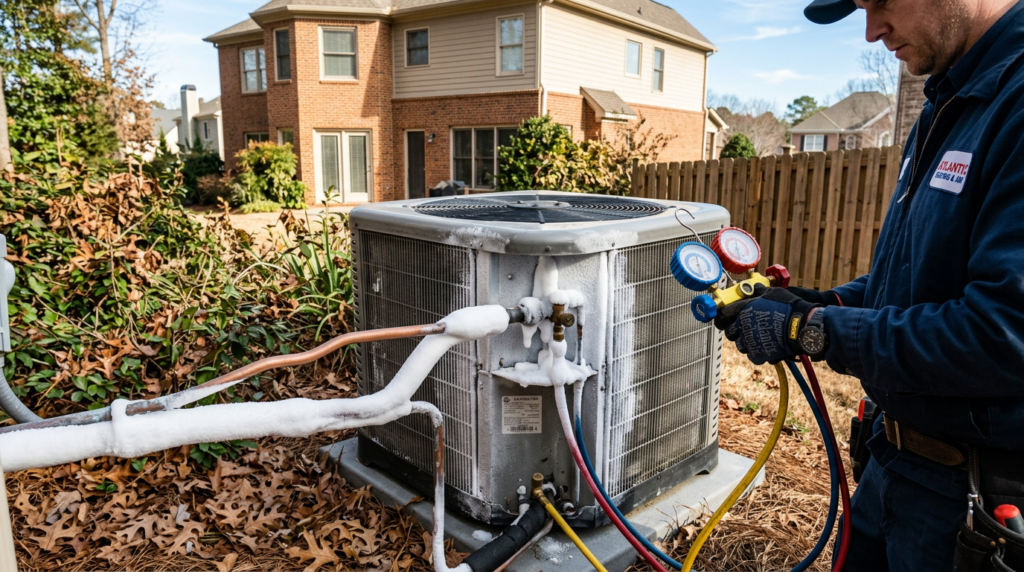
When airflow is restricted by a dirty filter or a clogged coil, the temperature of the refrigerant drops too low. This causes the moisture in the air to freeze onto the copper lines of your indoor unit. If you see ice on the lines or a block of frost on the indoor unit, your system has literally turned into an icebox—and not the good kind.
If you spot ice, follow the “Turn it off” rule immediately. You must switch the AC to “Off” and turn the fan to “On” to let the unit thaw completely for at least 24 hours. A technician cannot accurately perform ac repair while the unit is a block of ice, and showing up to a frozen unit usually means they’ll have to charge you for a return visit once it melts.
Is Your AC Actually Broken or Just Meeting the 20-Degree Rule?
Sometimes, your AC isn’t actually broken; it’s just being asked to do the impossible. Understanding the physics of cooling can save you a lot of frustration when the local news starts talking about “record-breaking heat.”
Understanding the Physical Limits of HVAC
Most residential air conditioners are designed to create a “20-degree differential.” This means if it is a blistering 100°F in Buckhead, your AC is likely only engineered to reach about 80°F inside. While high-efficiency units can sometimes do better, expecting 68°F when the asphalt is melting outside is a recipe for disappointment.
You can check your system’s health by measuring the “Delta T.” Take a thermometer and measure the temperature at a supply vent (where the cold air comes out) and then at the return vent (where the air goes in). If the difference is between 16 and 22 degrees, your unit is technically functional. Knowing this can help you decide if you truly need emergency AC repair or if the system is simply maxed out by the weather.
Improving Efficiency Beyond the AC Unit
If your Delta T is good but the house still feels hot, the problem might be your home’s “envelope.” In older Atlanta bungalows, poor attic insulation or leaky windows allow heat to pour in faster than the AC can remove it. Adding some simple window shading or checking your ductwork can make a massive difference.
Studies suggest that improving the efficiency of your duct system is often more effective than buying a larger AC unit. If you’re curious about the financial side of these upgrades, you can read more about how much HVAC should cost in Atlanta to help plan your budget for the next season.
Could Your Crawl Space or Attic Drain Be the Secret Saboteur?
Atlanta homes have unique architectural quirks, from vented crawl spaces to HVAC units tucked into tight, scorching attics. These areas often hide the “secret” reasons an AC stops working.
The Attic Drain Line Freeze-Up
About 90% of furnace and AC units in Atlanta attics use a primary drain line to whisk away condensation. Over time, algae and “gunk” build up in these pipes. When the line clogs, water backs up into a safety pan, triggering a float switch that kills the power to your unit to prevent a ceiling leak.
Before calling a pro, locate your condensate drain line outside (usually a small PVC pipe near the foundation). You can often clear a clog using a wet/dry vac to suck out the debris. This simple five-minute fix can save you a $200 service call fee. If you have a more complex setup, you might need professional heat pump repair to ensure the safety switches are reset correctly.
Crawl Space Humidity and Cooling Loads
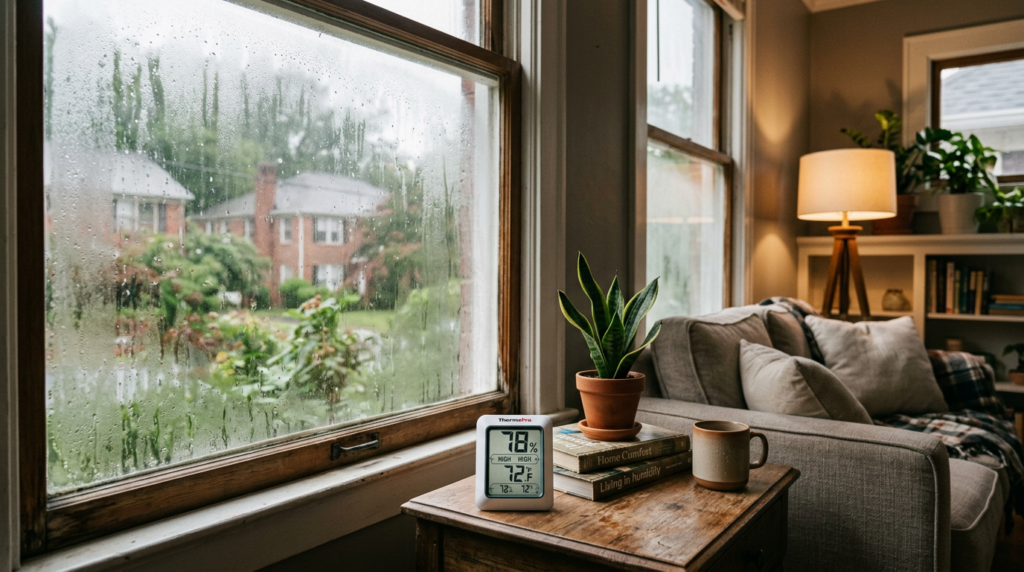
If your home is built over a crawl space, the humidity under your floors might be the real enemy. Unsealed crawl spaces introduce massive amounts of “latent heat” into your living area. This moisture makes the air feel much warmer than the thermostat says it is, forcing your AC to work double-time just to dehumidify the air.
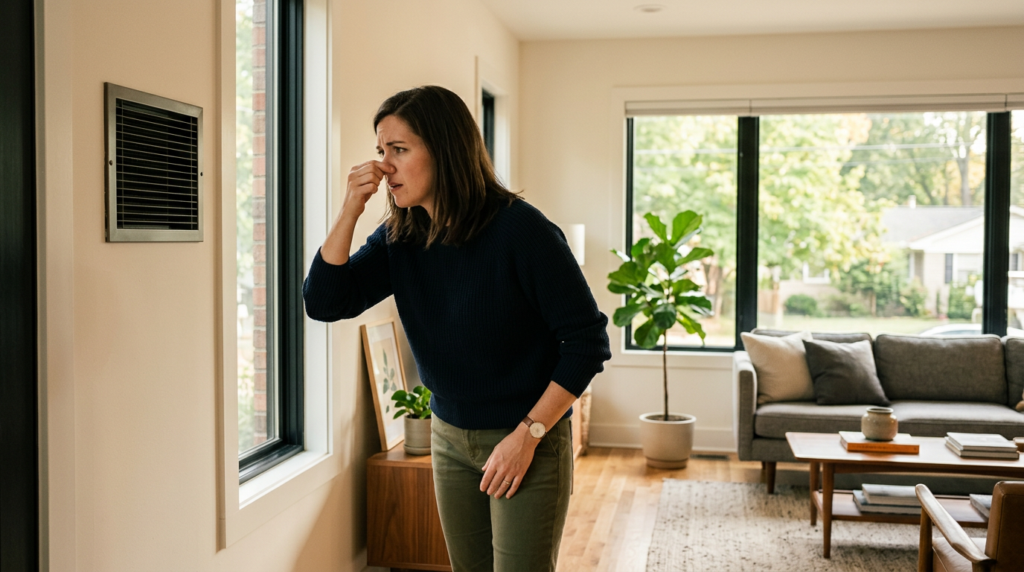
Musty smells are often the first sign that your cooling inefficiency is linked to ground moisture. According to the Georgia State Minimum Standards for home construction, proper ventilation and moisture control are essential for both structural health and cooling efficiency. Keeping that crawl space dry is just as important as keeping the AC running.
How Do You Spot a Dishonest HVAC Sales Pitch?
Unfortunately, the summer heat brings out some predatory sales tactics. Some companies pay their technicians on commission, which incentivizes them to find “problems” that require an expensive replacement rather than a simple fix.
Vetting the Maintenance Checklist
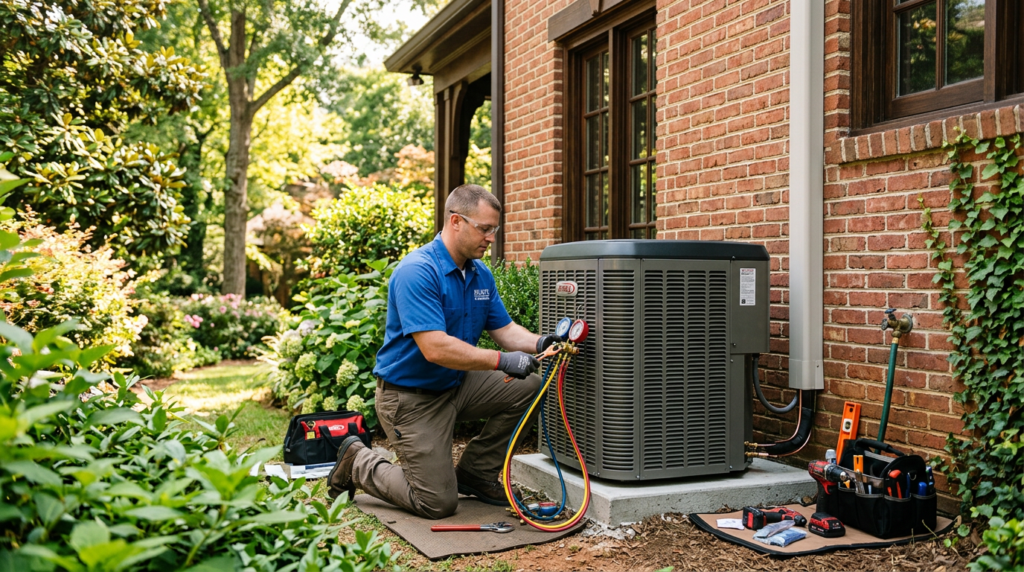
When you do hire someone, ask for a “Tune-Up Checklist” before they even arrive. A legitimate technician should be checking capacitors, measuring refrigerant pressures, and cleaning contactors. If they spend five minutes looking at the unit and then immediately tell you that you need a whole new system, be wary.
For peace of mind, many savvy homeowners use the “Second Opinion” strategy. If a tech gives you a scary diagnosis, thank them for their time and then call another local shop for ac repair in Atlanta without mentioning what the first company said. If the second tech finds a $50 part instead of a $10,000 failure, you’ve just saved a fortune.
Red Flags of High-Pressure Upselling
Listen for “scare tactic” language. Phrases like “This unit is a ticking time bomb” or “I can’t legally leave this running because it’s a safety hazard” are common red flags. While some issues are indeed urgent, a professional should be able to show you exactly why a component is failing using a multimeter or a pressure gauge.
Distinguishing between a necessary ac replacement and a predatory sales tactic is easier when you have a baseline of knowledge. You can consult home troubleshooting tips from neutral sources to get a better perspective on what constitutes a real HVAC emergency.
What Are the Next Steps for an Atlanta Summer Recovery?
If you’ve checked the filters, the breakers, and the drain lines and you’re still sweating, it is time to bring in the cavalry. But in Atlanta, “Peak Season” (June through August) means you need to be strategic about how you book your service.
Emergency Response and Wait Times
During a heatwave, wait times for a reputable local company can be 24 to 48 hours. Many companies offer “Emergency” pricing for after-hours or weekend calls, which can be significantly higher than standard rates. If your situation isn’t life-threatening, it might be worth waiting for a Monday morning slot.
While you wait, keep the blinds closed, use portable units if you have them, and check the air quality monitoring in Atlanta to see if you should keep your windows shut even at night. If the heat becomes dangerous, don’t hesitate to reach out for emergency AC repair in Atlanta to get your home back to a livable temperature.
Final Summary Checklist for Homeowners
Surviving a Georgia summer is a rite of passage for every Atlanta homeowner. By staying proactive and performing these simple checks, you can protect your wallet and your comfort. Before you let a stranger into your home, remember these seven essentials:
- Thermostat: Check the “Auto” setting and replace the batteries.
- Breakers: Look for tripped switches in your main panel and outdoor disconnect.
- Filters: Change them every 30-90 days, especially during pollen season.
- Coils: If you see ice, turn the unit off and let it thaw for 24 hours.
- Drain Lines: Use a wet/dry vac to clear clogs in the attic condensate line.
- The 20-Degree Rule: Don’t expect your AC to pull the temp down more than 20 degrees from the outdoor air.
- Crawl Space: Ensure moisture isn’t adding an invisible heat load to your home.
Being an informed homeowner means you don’t have to be at the mercy of the next heatwave or a pushy salesperson. Trust your gut, stay on top of your maintenance, and always prioritize local expertise over big-box pressure. Stay cool, Atlanta!