
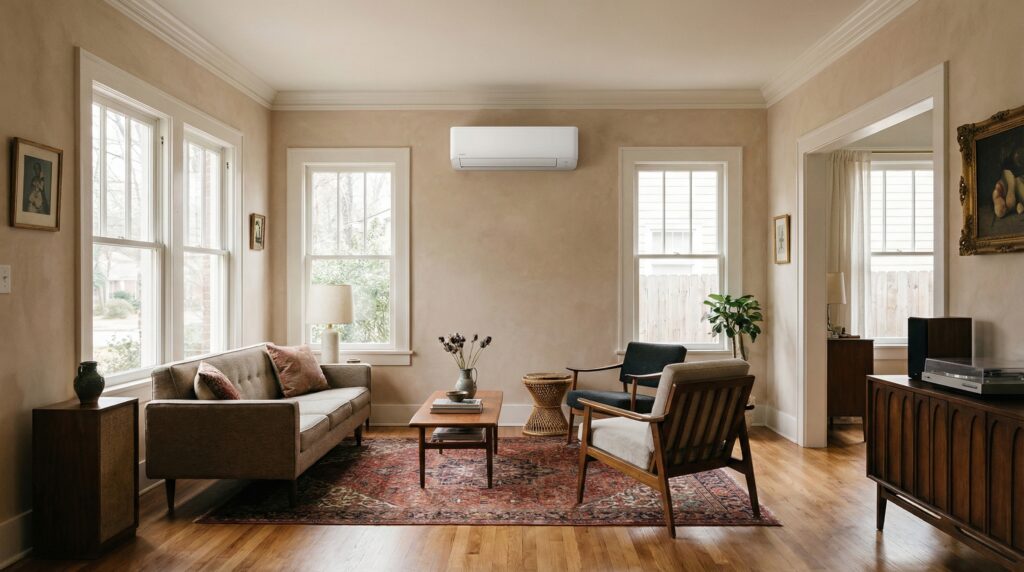
Upgrading an older home in neighborhoods like Virginia Highland or Decatur often presents a unique challenge: how to stay cool without destroying historic plaster walls for ductwork. Ductless mini-splits offer a high-efficiency solution, but local pricing can vary wildly based on Atlanta’s specific electrical requirements and labor rates. This guide breaks down the real-world investment required for a professional installation in the Metro Atlanta area, focusing on the transparency homeowners need to plan their budgets effectively.
How Much Does a Ductless Mini Split Cost in Atlanta?
Average Price Ranges for Local Installations
When looking at the total cost of a ductless system in Georgia, most homeowners can expect to invest anywhere from $4,000 to $18,000 or more. A single-zone system, typically used for a sunroom or a “bonus room” over a garage, usually falls on the lower end of that spectrum, while a whole-home solution with five or six indoor heads will push toward the upper limit.
Labor rates in the Metro Atlanta area for certified HVAC technicians often exceed national averages due to the high demand for specialized skills and the complexity of working in older, historic architecture. Before diving into specific unit costs, it is helpful to review this 2024 price guide for hvac in Atlanta to contextualize the difference between traditional central air systems and these modern ductless alternatives.
The Number of Zones and Capacity Requirements
In Atlanta, we reside in what the Department of Energy classifies as “Climate Zone 3,” which is characterized by high humidity and long, intense cooling seasons. This means your mini-split doesn’t just need to lower the temperature; it must be powerful enough to remove moisture from the air effectively.
BTU requirements are calculated based on the square footage of the room, ceiling height, and the amount of sunlight the space receives. While it might seem cheaper to buy multiple single-zone units, a multi-zone outdoor compressor is often more cost-effective because it allows one large unit to power up to eight indoor heads, reducing the amount of electrical work and outdoor footprint required.
For homeowners in newer Sandy Springs or Alpharetta builds with open-concept floor plans, capacity requirements can be tricky. Large, interconnected spaces often require higher-capacity indoor heads or strategically placed multiple units to ensure there are no “hot spots” in the kitchen or living areas.
High-Velocity HVAC vs. Mini-Split Comparison
For those living in historic homes where preservation is the top priority, “small duct” high-velocity systems are often the primary alternative to ductless mini-splits. These systems use flexible, two-inch tubes that can be snaked through walls, but they generally involve significantly higher labor costs than a ductless setup.
When performing a cost-benefit analysis, you must weigh the aesthetic of hidden ducts against the visible wall-mounted heads of a mini-split. While high-velocity systems are nearly invisible, they often cost 20% to 40% more to install than a premium ductless system.
Many Atlanta homeowners find that the modern, sleek look of a mini-split is a fair trade-off for the superior zone control and energy efficiency they provide. However, if you are concerned about the “wall wart” look, there are several alternative indoor head designs, such as floor consoles or ceiling cassettes, that we will discuss later in this guide.
What Factors Influence the Final Quote for Atlanta Homeowners?
Brand Tiers and Efficiency Ratings
The brand you choose plays a massive role in the longevity and performance of your system. Premium brands like Mitsubishi, Daikin, and Fujitsu command higher MSRPs because their manufacturing standards are designed for decades of use, rather than just a few seasons.
In our local climate, the SEER2 (Seasonal Energy Efficiency Ratio) rating is a critical factor in your long-term return on investment. Because Atlanta’s cooling season can stretch from late March into October, a higher SEER2 rating—while more expensive upfront—can save you thousands of dollars in utility bills over the life of the unit.
Advanced technology like “i-see” sensors and inverter-driven compressors allow these units to ramp up or down subtly. This is especially useful for managing energy efficiency and decarbonization of historic buildings where maintaining a steady temperature is better for the structure than the “on-off” blast of a traditional furnace.
Installation Complexity and Labor Nuances
Not all installations are created equal. You may encounter what the industry calls an “I Don’t Want This Job” quote—an inflated bid from a contractor who is wary of the complexities involved in a third-story walk-up in Inman Park or a tight, damp crawlspace in a mid-century ranch.
The length of the “line set”—the copper tubing and wiring that connects the indoor head to the outdoor unit—also impacts the price. If the indoor unit is on the opposite side of the house from the compressor, the cost of materials and labor increases. Furthermore, many homeowners opt for “LineHide” covers, which are plastic or metal channels that protect the lines and match the home’s exterior to maintain neighborhood curb appeal.
A professional ac installation in Atlanta requires specialized knowledge of local moisture management. Because our air is so humid, the condensate drainage system must be perfectly pitched or equipped with a reliable pump to prevent water damage to your interior walls.
Electrical Upgrades and Permitting Costs
One of the most overlooked costs in an HVAC upgrade is the electrical panel. Many older homes in Midtown or Inman Park still operate on 100A or 125A service, which is often insufficient for a modern multi-zone heat pump system. If your panel is full, you may need a 200A upgrade, which typically adds $2,000 to $3,500 to the total project cost.
Permitting is another mandatory expense. Each county—Fulton, DeKalb, Cobb, and Gwinnett—has its own fee structure and inspection requirements. These permits ensure that the electrical work is up to code and that the refrigerant lines are safely installed.
When researching the necessity of these upgrades, homeowners often look toward energy retrofits for sustainability in Atlanta to understand how code compliance and modern technology intersect in older neighborhoods.
Can I Save Money by Installing a DIY Mini Split?
The Buy Your Own Unit Trap
It is tempting to browse e-commerce sites and find a mini-split unit for $1,200, but there is a major catch. Most reputable HVAC companies in the Atlanta area will refuse to install equipment purchased by the homeowner. This isn’t just about profit margins; it’s about liability and the inability to guarantee the performance of a unit they didn’t source.
DIY units, while popular on YouTube, often lack a local supply chain for replacement parts. If a proprietary circuit board fails during a July heatwave, you might find yourself waiting weeks for a part to ship from overseas, whereas professional-grade brands have local distributors with parts in stock.
Furthermore, there are legal hurdles to consider. In the state of Georgia, handling refrigerants requires an EPA Section 608 certification. Opening a refrigerant valve without the proper training and equipment can lead to leaks that damage the environment and ruin the efficiency of your unit.
Professional Installation vs. DIY Reality
The technical difference between a professional and a DIY installation often comes down to the connections. Many DIY kits use “pre-charged” lines with simple screw-on flare connections that are prone to leaking over time. Professionals use specialized tools to create high-torque brazed or flared connections that are pressure-tested with nitrogen.
A professional will also use a vacuum pump to remove all air and moisture from the lines before releasing the refrigerant. This step is critical; even a tiny amount of moisture inside the system can turn into acid, which will eat away at the compressor from the inside out.
Scheduling ductless mini-split services ensures that your system qualifies for the full manufacturer’s warranty, which often covers parts for 10 to 12 years—a protection you typically lose with a self-installed unit.
Rebates and Financial Incentives
While the upfront cost of a professional installation is higher, there are several ways to offset the investment. Under the Inflation Reduction Act (IRA), homeowners may be eligible for federal tax credits of up to $2,000 for high-efficiency heat pump installations.
Local utilities like Georgia Power also offer rebates for customers who switch from inefficient window units or old electric baseboard heat to high-efficiency ductless systems. These incentives can often shave several hundred dollars off the final price tag.
Beyond immediate rebates, it is helpful to consider the long-term value. Studies regarding multifamily energy use in Atlanta show that high-efficiency upgrades significantly reduce monthly overhead and can increase the resale value of a property by making it more “future-proof.”
What Are the Best Aesthetic Solutions for Historic Atlanta Homes?
Beyond the Standard Wall Head
If you are worried that a white plastic box on the wall will ruin the vibe of your 1920s bungalow, you have options. Floor consoles are a fantastic alternative; they sit low to the ground, much like a traditional radiator, and are perfect for rooms with low ceilings or many windows.
Ceiling cassettes are another popular choice for homeowners who have attic access above the room. These units are recessed into the ceiling, with only a flat grille visible. They offer 360-degree airflow and provide a much more integrated “recessed lighting” look that blends into the architecture.
For those who want the best of both worlds, concealed duct units (also known as “slim ducts”) can be hidden in a closet or attic. A very short run of ductwork then connects the unit to small, discrete vents in the ceiling or wall, providing the benefits of a mini-split with the invisibility of central air.
Local Service Areas for Specialized Installations
Different Atlanta neighborhoods require different approaches to HVAC design. We frequently provide ductless mini-split services in Atlanta where the focus is often on preserving original crown molding and lath-and-plaster walls.
In contrast, our work in the modern aesthetic environments of Brookhaven and Sandy Springs often involves multi-zone systems that need to be integrated into sleek, contemporary interiors. We also offer ductless mini-split services in Sandy Springs that focus on maximizing efficiency in large, multi-story suburban homes.
Whether you are in a Marietta ranch or a Roswell historic cottage, the goal remains the same: providing a climate control solution that respects the home’s design while delivering modern comfort.
Maintenance and Longevity in Humid Climates
Atlanta’s humidity is the primary enemy of any HVAC system. Without regular maintenance, the cold coils inside a mini-split can become a breeding ground for biological growth. This can lead to “dirty sock syndrome”—a musty smell that permeates the room—and reduced airflow.
Annual deep cleanings are essential. A professional technician will use specialized bib kits and chemical cleaners to flush the coils and the blower wheel, ensuring that the system remains efficient and the air stays healthy.
When considering the long-term performance of these units, research on the use of ductless mini-split electric heat pumps suggests that systems that are properly sized and maintained can easily last 15 to 20 years, even in challenging southern climates.
Is a Ductless Mini Split the Right Investment for Your Atlanta Home?
Summary of Total Cost of Ownership
When you tally the equipment, labor, electrical upgrades, and permitting, a ductless mini-split is a significant investment. However, when compared to the cost of installing traditional ductwork throughout an older home—which often involves “boxing out” corners of rooms and extensive drywall repair—ductless systems are often the more affordable and less invasive choice.
Over a 15-year period, the energy savings alone can often pay for a large portion of the initial installation cost. Furthermore, the ability to turn off the air in guest rooms or storage areas (true zone control) provides a level of utility bill management that a central air system simply cannot match.
For residents seeking local climate control solutions, the decision usually comes down to a desire for precision comfort and a respect for the home’s existing structure.
Next Steps for a Professional Quote
If you are ready to move forward, the first step is to find a contractor who specializes in ductless technology. Many traditional HVAC companies treat mini-splits as an afterthought, but a specialist will understand the nuances of placement and drainage that ensure a leak-free, quiet operation.
To prepare for an estimate, make sure your electrical panel is easily accessible and that there is a clear path to the attic or crawlspace. This allows the technician to provide an accurate quote without making assumptions about the difficulty of the wire runs.
Ultimately, a ductless mini-split is more than just an appliance; it is a custom-engineered solution for your home’s unique layout. By choosing professional installation, you are investing in the comfort, health, and value of your Atlanta property for decades to come.
Key Takeaways for Atlanta Homeowners
- Expect to invest $4,000–$18,000+ depending on the number of zones and the complexity of the electrical work required.
- Prioritize SEER2 ratings to combat Atlanta’s long, humid cooling seasons and maximize long-term energy savings.
- Avoid the DIY trap to ensure you have a valid manufacturer’s warranty and a system that won’t leak refrigerant or condensate.
- Consider aesthetic alternatives like floor consoles or ceiling cassettes if you want to maintain the historic integrity of your home.
- Factor in electrical upgrades, especially if you live in an older neighborhood like Midtown or Virginia Highland where 100A panels are common.