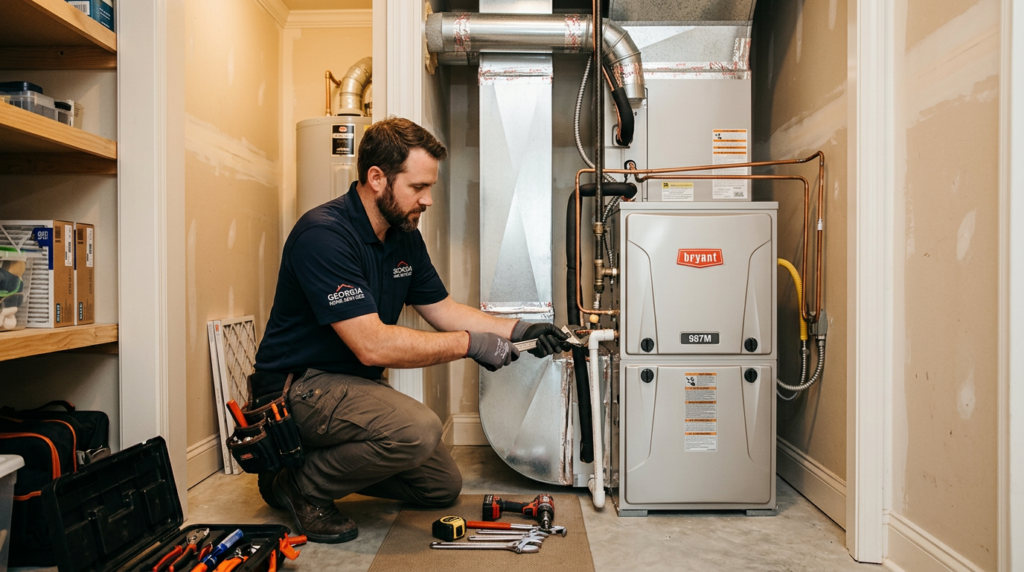
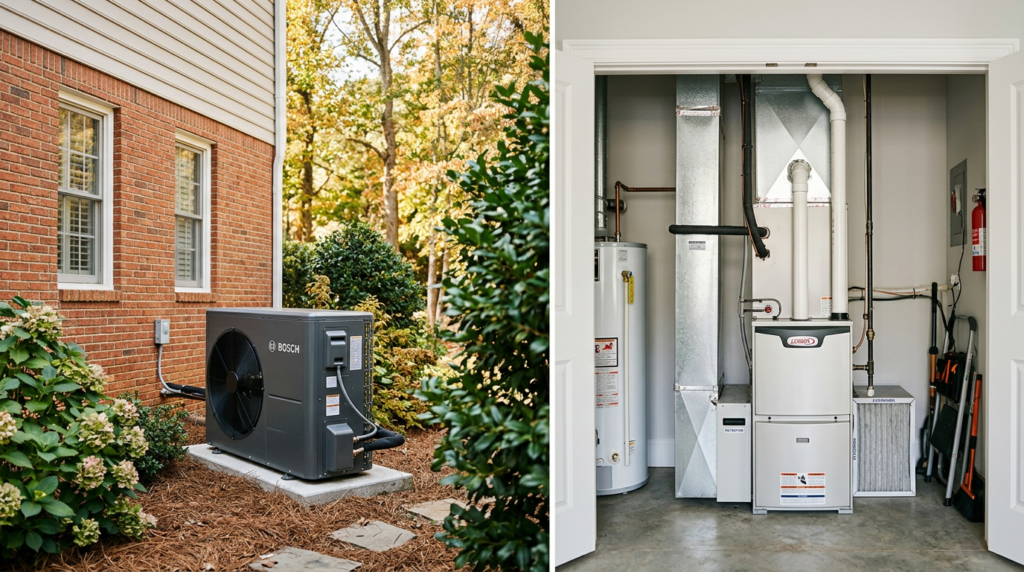
Deciding between a heat pump and a gas furnace in the Peach State is no longer just about the upfront price tag; it’s about navigating Georgia’s unique utility landscape and humid subtropical climate. With rising natural gas base charges and massive new federal rebates hitting the local market, many Atlanta homeowners are questioning if the traditional furnace still reigns supreme.
For decades, the “standard” setup in North Georgia was a gas furnace paired with a central air conditioner. However, as technology evolves and the cost of simply being connected to the gas grid increases, the math is shifting. This guide breaks down the technical specs, hidden costs, and comfort factors to help you decide which system fits your Georgia home and your wallet.
How Does the Georgia Climate Impact System Performance?
Efficiency in Mild Southern Winters
Georgia’s climate is ideal for heat pumps because temperatures rarely stay below freezing for extended periods, allowing the units to operate at peak efficiency. Unlike the Midwest, where sub-zero temperatures are common, our “winters” are often a collection of chilly mornings followed by 55-degree afternoons.
Modern heat pumps are designed to thrive in this environment. They don’t “create” heat through combustion; they move it from the outside air into your home. Even when it feels cold to us, there is still ambient heat energy available in the atmosphere. According to data regarding space heating in U.S. homes by state, southern states are increasingly adopting electric heat because our moderate design temperatures don’t require the massive BTU output of a gas flame.
Modern heat pumps can extract heat from the air even in the mid-20s, which covers the vast majority of winter nights in the Atlanta metro area. During the “shoulder seasons” of March and October, a heat pump provides gentle, efficient climate control without the “over-shooting” common with high-heat gas furnaces.
Performance During Georgia Ice Storms
While we enjoy mild winters, we do face the occasional North Georgia “ice-pocalypse.” Freezing rain and high humidity can cause ice to build up on an outdoor unit’s coils, which triggers the “defrost cycle.” This is a normal process where the unit temporarily reverses its flow to melt the ice, but it can be startling to homeowners who see steam rising from their unit.
Practical winterizing can prevent many of these headaches. Simply ensuring your unit is on a “snow leg” stand—elevating it a few inches off the ground—allows meltwater to drain away before it re-freezes. Furthermore, buying an energy-efficient home or upgrading your current one often involves checking the defrost control board to ensure your system isn’t working harder than it needs to during a freeze.
For those rare nights when the temperature drops into the teens, most Georgia systems are equipped with supplemental “heat strips.” These electric resistance coils act as a backup, ensuring your home stays at 70 degrees even if the outdoor air is struggling to provide enough energy.
Dehumidification Benefits for Georgia Summers
The dual-role of the heat pump as a high-efficiency air conditioner is its secret weapon during the grueling 90-degree July humidity. In Georgia, cooling is often a bigger financial burden than heating, making the summer performance of your unit paramount.
Variable-speed technology, often found in high-end heat pumps, has a superior ability to pull moisture out of the air compared to traditional single-stage furnace/AC combos. By running at lower speeds for longer durations, these systems act as a whole-home dehumidifier, which is essential for preventing that “clammy” feeling in an Atlanta ranch or a Sandy Springs bungalow.
What Are the Real Operating Costs When Factoring in Georgia Utility Fees?
The Vampire Gas Base Charge
One of the most frustrating aspects of being a Georgia homeowner is the Atlanta Gas Light (AGL) base charge. Even if you don’t turn your furnace on for a single second in May, you will still receive a bill. This “vampire charge” typically ranges from $30 to $40 per month depending on your provider and the pass-through costs.
When you look at the “Math of Disconnection,” the savings become clear. By eliminating the gas meter entirely and switching to an all-electric heat pump and electric water heater, a Georgia household can save $360–$480 per year in fixed fees alone. That is money saved before you even factor in the efficiency of the equipment.
Comparing the rising cost of natural gas vs. Georgia Power’s seasonal electric rates is also eye-opening. While gas prices fluctuate wildly based on global markets, Georgia’s electricity rates, while rising, are often more predictable during the winter heating months when demand is lower than the summer peak.
Energy Efficiency and Consumption Metrics
To understand the true value, you have to look at the georgia residential energy efficiency potential which highlights how much waste occurs in older, gas-heated homes. Modern systems use SEER2 (for cooling) and HSPF2 (for heating) ratings to measure efficiency.
A heat pump installation ensures that these ratings are actually achieved in the field. If a unit is sized incorrectly for the square footage of an Atlanta home, it will short-cycle, wasting electricity and failing to reach its rated efficiency. In the South, a high HSPF2 rating on a heat pump often leads to significantly lower annual utility bills compared to even a high-efficiency gas furnace.
Maintenance and Longevity Considerations
There is a common debate about maintaining two systems versus one. A furnace and AC combo involves a gas valve, burners, an ignition system, and a separate cooling coil. A heat pump is a single integrated system that handles both.
However, because a heat pump works year-round, it does experience more “run hours” than a furnace that sits idle all summer. It is important to consider how the 2025-2026 refrigerant transition will impact repair costs. Choosing a system now that utilizes the latest eco-friendly refrigerants will ensure that parts and “recharge” gases remain affordable for the next 15 years.
Which System Offers the Best Financial Incentives and Rebates?
Georgia’s $8,000 HEEHRA Rebate Guide
The financial landscape for HVAC has changed dramatically thanks to the High-Efficiency Electric Home Rebate Act (HEEHRA). Georgia homeowners can find specific details on Georgia’s home energy rebates which offer massive incentives for switching to electric heat.
Low-to-moderate income households in the Atlanta metro area can qualify for up to $8,000 off a new heat pump at the point of sale. This isn’t a tax credit you wait a year for; it is a direct reduction in the price. For those who don’t qualify for the full rebate, the 25C federal tax credit still offers up to $2,000 annually for high-efficiency heat pump upgrades.
Initial Installation Price Comparison
When looking at the upfront cost, a standard furnace installation is often cheaper than a high-performance heat pump. A standard gas furnace might range from $4,000 to $7,000, whereas a top-tier heat pump could reach $9,000 to $12,000 before rebates.
However, you must consider the “total system.” If you are replacing both an old AC and an old furnace, the price gap narrows significantly. Reviewing how much should hvac cost in Atlanta, GA shows that when you factor in the $2,000 tax credit and potential state rebates, the heat pump often becomes the more affordable long-term investment.
Long-Term ROI and Home Resale Value
Energy efficiency is becoming a major selling point in competitive Georgia real estate markets like Alpharetta, Decatur, and Sandy Springs. Buyers are increasingly wary of high utility bills and the environmental impact of gas.
Upgrading to a high-efficiency system can improve home appraisals. According to the builder’s guide for energy efficient homes in Georgia, homes with lower operating costs sell faster and for higher premiums. The “payback period” for switching from gas to electric in Atlanta has dropped from ten years to roughly five years when all fees and rebates are included.
Will a Heat Pump Actually Keep Your Home Comfortable?
The Psychology of Heat and Vent Temperatures
One of the biggest hurdles for heat pumps is the “feel” of the air. A gas furnace creates a flame that heats air to roughly 120–140 degrees. When that air hits your skin, it feels “hot.” A heat pump, conversely, produces air that is usually around 90–100 degrees.
Since your body temperature is 98.6 degrees, 92-degree air can actually feel “cool” if it’s blowing directly on you, even though it is warming the room. Modern “Inverter” heat pumps have solved much of this by providing more consistent, warmer discharge air. If your current unit is blowing truly cold air in the winter, you likely need a heat pump repair to check the refrigerant charge or the reversing valve.
Ducting Compatibility and Airflow Issues
Heat pumps move a higher volume of air at lower temperatures to achieve the same heating effect as a furnace. This means your ductwork needs to be up to the task. If you have an older home with narrow, restrictive ducts, a heat pump might cause a “whistling” sound or struggle to push air to the far corners of the house.
Before committing to a furnace replacement or a heat pump swap, a technician should perform a static pressure test. This ensures your home’s “lungs” (the ducts) can handle the “breath” of the new system. In many cases, minor duct modifications can unlock massive comfort gains.
Dual Fuel/Hybrid Systems as the Middle Ground
For homeowners in Marietta or North Georgia who are nervous about the “lukewarm air” of electric heat, the dual-fuel system is the perfect compromise. This setup pairs an electric heat pump with a gas furnace backup.
The heat pump handles the heating for 90% of the year when temperatures are above 35 degrees. When the “Arctic Blast” hits, the system automatically switches to the gas furnace to provide that scorching, cozy heat. It’s the “Best of Both Worlds” approach that offers maximum efficiency without sacrificing the peace of mind that comes with gas.
How Do You Choose the Best System for Your Specific Georgia Home?
Local Service Area Considerations
Location matters more than you might think. For example, scheduling a heat pump installation is often a smart move for urban lots where space is tight and neighbors are close. Modern heat pumps are significantly quieter than older AC units, which your neighbors will appreciate.
Conversely, a furnace installation might still be favored by those in older, less-insulated homes where the high-BTU “blast” of a furnace is needed to overcome drafty windows. Every home is a micro-climate, and your choice should reflect your specific architecture.
The Final Verdict: Heat Pump or Furnace?
The “winner” depends on your goals. If you are looking to slash your monthly fixed costs and take advantage of thousands of dollars in government incentives, the heat pump is the clear champion for the Georgia climate. It is the most forward-thinking choice for new construction and modern renovations.
However, if you already have a relatively new gas water heater and stove, and you prefer the intense heat of a gas flame during the winter, a high-efficiency furnace remains a reliable workhorse.
Your Final Checklist:
- Gas Availability: Are you tired of the AGL base charges?
- Electrical Capacity: Does your panel have room for a 30-50 amp breaker for a heat pump?
- Rebate Eligibility: Does your household income qualify you for the $8,000 HEEHRA rebate?
- Home Insulation: Is your home “tight” enough to hold the gentle heat of a heat pump?
Ultimately, the best way to decide is to book a professional load calculation. This ensures your system—whether gas or electric—is sized perfectly for Georgia’s unique blend of “big cold” and “big humidity.”
Conclusion: Making the Right Choice for Your Georgia Home
Choosing between a heat pump and a furnace in Georgia isn’t just a technical decision; it’s a financial one. While the gas furnace has been the reliable standard for decades, the combination of Georgia’s mild winters and the elimination of monthly gas base charges makes the heat pump an incredibly attractive alternative in 2024.
By leveraging federal tax credits and state-specific rebates, you can often install a high-efficiency electric system for a similar net cost to a traditional gas setup. Whether you opt for the all-electric route or the “best of both worlds” dual-fuel approach, focusing on SEER2 ratings and proper ductwork compatibility will ensure your home remains a sanctuary against the Georgia heat and the occasional winter chill. Compare your options, run the math on your utility bills, and choose the system that provides the long-term ROI your home deserves.