
When your air conditioner dies in the middle of a 95-degree July in Atlanta, you aren’t just buying a machine—you’re buying relief. The thick Georgia humidity turns a broken HVAC system from a minor inconvenience into an emergency within hours. However, this urgency is exactly what some contractors count on.
With quotes in the metro area currently ranging from $6,000 to over $20,000, many homeowners feel like they are being taken for a ride by “big box” contractors. The price discrepancy between a small local outfit and a massive franchise can be staggering, often leaving consumers wondering if they are paying for a premium machine or just a massive advertising budget. This guide breaks down the honest costs of HVAC in Georgia, helping you spot the difference between a quality installation and a high-pressure upsell.
What is the Average Cost of HVAC Installation in Atlanta?
Local Market Price Benchmarks
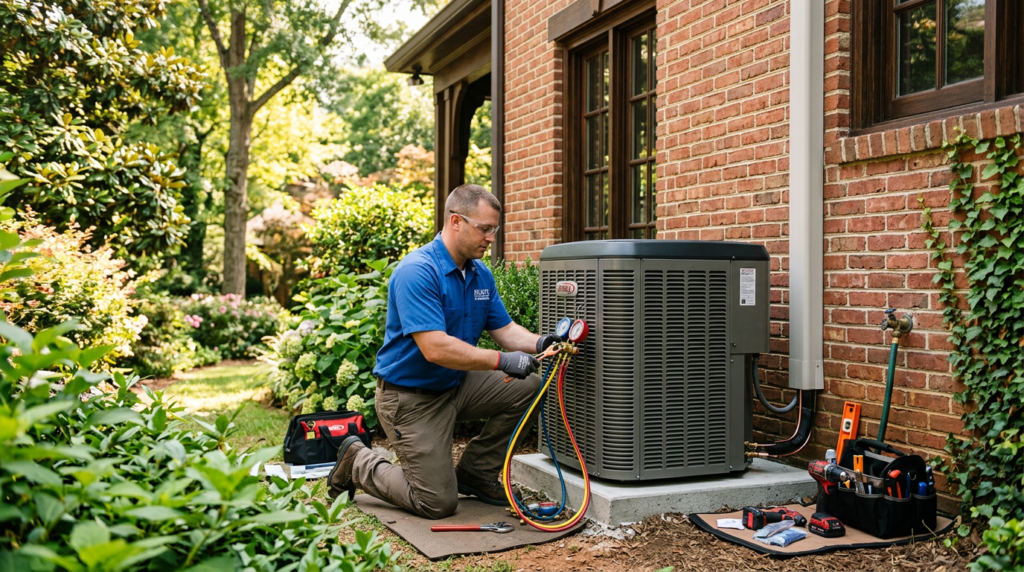
For a standard 2.5 to 5-ton system common in Atlanta suburbs like Marietta, Decatur, or Alpharetta, the average homeowner should expect to see quotes landing between $8,000 and $13,000 for a full system replacement. This typically includes a new outdoor condenser, an indoor coil, and a furnace or air handler. If you are opting for high-end, variable-speed technology, those prices can climb into the $15,000 to $18,000 range.
It is important to note that ac installation in Atlanta often carries a “metro premium” compared to rural parts of Georgia. This isn’t necessarily price gouging; it’s a reflection of higher labor costs, stricter permitting fees, and the logistical nightmare of navigating a van through I-285 traffic. While a budget-friendly single-stage unit will keep the house cool, many local homeowners are opting for two-stage or variable-speed systems to better handle the fluctuating Georgia spring and fall.
The Hidden Cost of the Atlanta “Big Box” Quote
If you’ve seen a billboard on I-75 or a TV commercial during the local news, you’ve encountered the “big box” contractors. Many of these companies are owned by private equity firms or large conglomerates like the Wrench Group. Because they have massive overhead, including “comfort consultants” who work on commission, their quotes are often 30% to 50% higher than a local owner-operator.
You can often find a better deal by doing your own research; for instance, many people seek an opinion on my current HVAC quotes through community forums to see if they are being overcharged. While some homeowners use Costco or other retail programs to get a 10% shop card rebate, you must remember that the base price is often inflated to cover that “rebate.” The reality is that “free estimates” are never truly free; the time spent by a salesperson to drive to your home is baked into the final project price.
Labor-Only and Customer-Supplied Equipment Risks
In an effort to save money, some homeowners attempt to buy equipment online from wholesalers and then hire a technician for the labor. However, most reputable Atlanta contractors refuse to install units they didn’t source themselves. This isn’t just about profit; it’s about warranty liability. If a unit you bought online arrives with a leak, the contractor cannot be held responsible, leading to a finger-pointing match that leaves you without cooling.
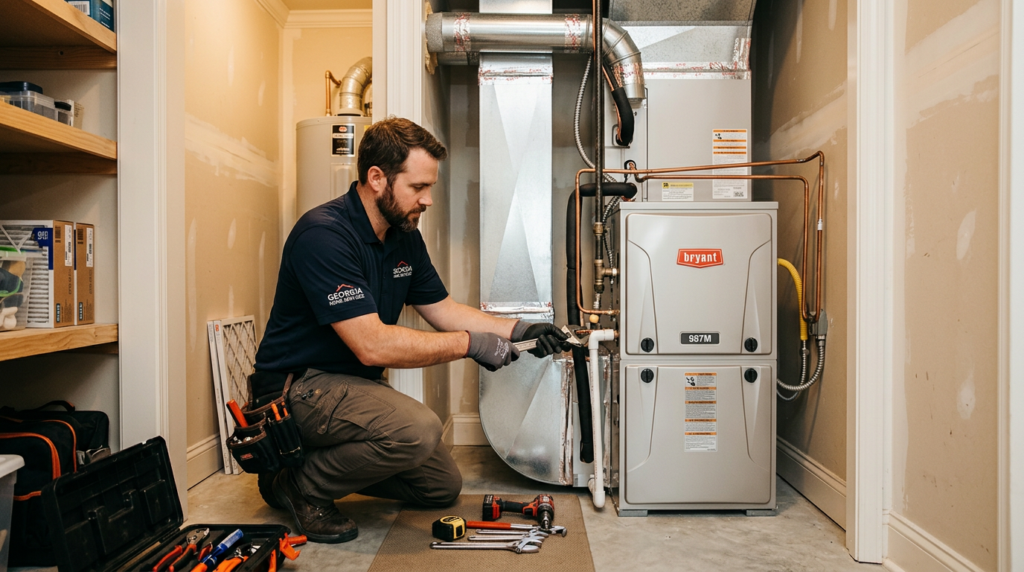
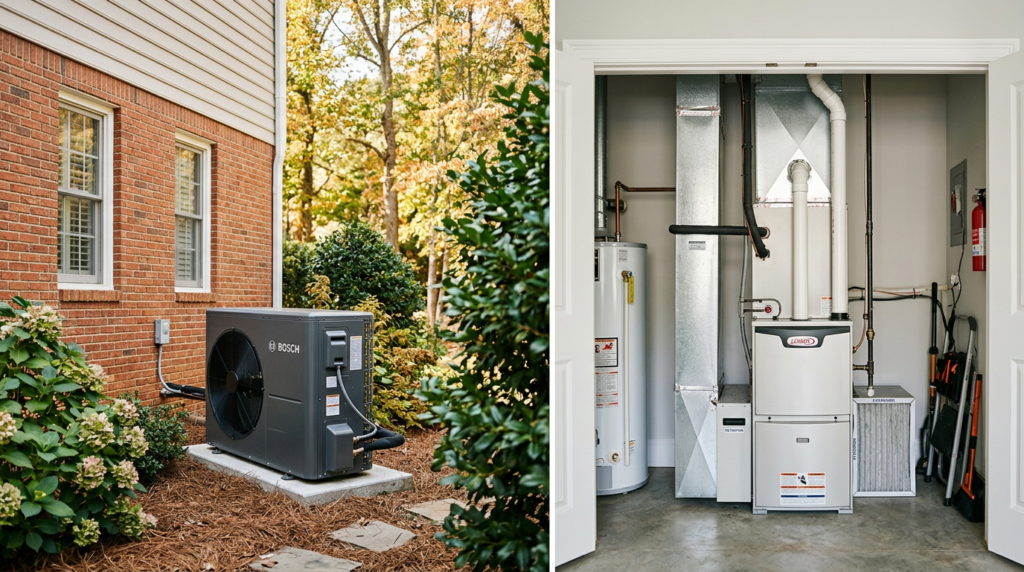
Furthermore, specialized systems require specific expertise that a “handyman” style installer likely lacks. For example, a proper heat pump installation in Atlanta requires specialized labor to ensure the backup heat strips and refrigerant charge are calibrated for our specific climate. DIY-style sourcing simply cannot guarantee the long-term performance that a professional, turn-key installation provides.
Which Factors Most Heavily Impact Your Atlanta HVAC Quote?
SEER2 Ratings and Georgia Energy Standards
In 2023, the Department of Energy updated efficiency standards to SEER2, which changed how equipment is tested and rated. These stricter requirements have increased the baseline cost for ac replacement in Atlanta because manufacturers had to redesign their units to meet the new minimums. While the entry-level equipment is more expensive than it was three years ago, the energy savings are more pronounced.
When calculating the ROI of an 18+ SEER system, you have to look at Georgia Power’s tiered summer rates, where prices per kilowatt-hour spike during the hottest months. To help bridge the gap between basic and high-efficiency models, georgia’s home energy rebates can often offset a portion of the investment. These incentives make it more feasible to choose a system that will actually lower your monthly overhead during a record-breaking heatwave.
Humidity Management and System Sizing
Atlanta’s 60%+ relative humidity means you need a system sized for moisture removal, not just temperature reduction. If a contractor suggests a 5-ton unit for a house that only needs a 3-ton unit, the system will “short-cycle,” meaning it turns off before it has a chance to pull the water out of the air. This results in a house that feels cold but “clammy” and “soupy.”
The technical superiority of variable-speed systems, often called “Infinities” or “iQ Drives,” is their ability to run at low speeds for longer periods. This is essential for maintaining comfort during Georgia’s late August afternoons when the air is thick enough to wear. Improper sizing in older Atlanta bungalows or Victorians in Inman Park often leads to mold growth in closets and behind furniture because the air is never properly dehumidified.
Ductwork Integrity and Home Envelope Sealing
Investing in hvac in Atlanta is a wasted investment if your attic isn’t properly sealed. Many older homes in the metro area have ductwork that leaks 20% or more of the conditioned air into the crawlspace or attic. A reputable contractor should inspect your ducts before giving a quote, as even a brand-new unit won’t fix a room that stays hot due to a disconnected pipe.
Some energy experts recommend a “Blower Door Test” as a prerequisite to installation to ensure your home isn’t leaking air like a sieve. According to a report on how Atlanta can save energy, improving the home envelope is just as critical as the machinery itself. For historic homes with limited crawlspace, homeowners are increasingly looking toward ductless mini-split services in Atlanta to avoid the high cost of retrofitting traditional metal ducts.
Is Your Quote from a “Service Tech” or a “Sales Tech”?
Identifying Commission-Based Sales Tactics
One of the biggest red flags in the Atlanta market is the “Comfort Consultant” who arrives in a clean polo shirt and has never actually held a wrench. These are sales technicians whose primary job is to move high-margin equipment. If the person giving you a quote spends more time talking about financing and “today only” discounts than they do looking at your ductwork and electrical panel, you are being sold, not serviced.
Large Atlanta chains use these psychological tactics to prevent you from getting three quotes. They might offer a $2,000 discount if you sign the contract before they leave your driveway. Resist this pressure. The value of seeking out “two-man outfits” or smaller local companies is that you are often speaking directly to the person who will be doing the work, providing a level of honest, non-commissioned advice that big firms struggle to match.
Understanding the Real Value of Local Permits
It may be tempting to “save” $500 by letting a contractor skip the permit process, but skipping a permit in the City of Atlanta or Fulton County is a massive liability. If a non-permitted unit causes a fire or water damage, your homeowner’s insurance may have grounds to deny the claim. Furthermore, a permit ensures that a third-party city inspector verifies the electrical and drainage work was done to code.
When you review Atlanta’s zoning and permitting services requirements, you’ll see that mechanical upgrades are strictly regulated for a reason. A licensed contractor’s permit fee isn’t just a tax; it’s your insurance policy that the work is safe. If a contractor asks you to pull the permit as a “homeowner,” run the other direction—this usually means they aren’t properly licensed or insured.
Real-World Power Bill Comparisons
Homeowners often ask if the extra $4,000 for a high-efficiency unit actually pays for itself. Data from local “smart home” case studies shows that moving from a 10-year-old 13 SEER unit to a modern 18 SEER unit can drop summer cooling bills by 30%. However, a furnace installation in Atlanta might save less than expected on the heating side if the home’s insulation is neglected, as gas prices in Georgia are relatively stable compared to electricity.
When considering the upfront cost of home electrification versus traditional gas-split systems, the Georgia climate is actually an ideal candidate for heat pumps. Because our winters are relatively mild, a high-efficiency heat pump can handle 95% of the year without ever needing expensive “emergency” heat strips. This shift away from gas can simplify your utility bills and reduce the number of appliances that require annual maintenance.
How Can You Save Money on a New HVAC System in Georgia?
Federal Tax Credits and Local Rebates
The Inflation Reduction Act (IRA) has changed the math for many Atlanta families. You can currently claim federal tax credits of up to $2,000 for a qualifying heat pump setup in Atlanta. This is a direct credit against your tax liability, not just a deduction. When combined with Georgia Power’s specific rebates for smart thermostats and high-efficiency cooling, the “premium” system often ends up costing the same as a mid-range model.
To maximize savings, try to time your replacement during the “shoulder seasons” of March or October. Manufacturers often offer massive rebates during these months to keep their factories running when demand is low. Contractors are also more likely to negotiate on labor rates when their schedules aren’t packed with emergency “no-cool” calls.
The “Padsplit” and Rental Property Considerations
For Atlanta property investors or those working on “Padsplit” conversions, the priorities are different. In a rental environment, durability and ease of repair often trump high-SEER efficiency. You want a system that any technician in the city can find parts for on a Sunday afternoon.
Selecting a reliable heating system installation in Atlanta for a multi-unit dwelling requires a focus on robust, simple controls. Renters are notoriously hard on thermostats, and high-end variable-speed boards are expensive to replace if a tenant accidentally shorts the system. Stick to reputable, mid-grade brands with 10-year parts warranties for investment properties.
Off-Season Scheduling Advantages
If your system is 12 years or older and struggling to keep up, don’t wait for it to die. Booking an air conditioning installation in Atlanta in February or November can lead to significantly lower labor rates. Contractors are hungry for work during these windows and are much more likely to throw in a free media filter cabinet or a smart thermostat to win the job.
By avoiding the “emergency premium,” you also have the luxury of time. You can get three or four quotes, check references, and truly compare the specifications of the equipment. When your house is 88 degrees inside, you are more likely to make a rushed, expensive decision just to get the air back on.
What Should You Ask Before Signing an HVAC Contract in Atlanta?
Critical Warranty and Service Agreement Questions
Always distinguish between the manufacturer’s parts warranty and the contractor’s labor warranty. Most brands offer a 10-year parts warranty if the unit is registered, but the labor warranty is provided by the installer. A “10-year parts and labor” guarantee is the gold standard for a gas furnace installation in Atlanta, as it protects you from the rising cost of refrigerant and hourly tech rates.
Ask if the company includes the first year of maintenance in the purchase price. Many “service agreements” are essentially a monthly subscription for two visits a year. While these are valuable for keeping the warranty valid, make sure you aren’t being locked into a predatory contract that is difficult to cancel.
Technical Specifications for the Georgia Climate
Demand a Manual J load calculation. This is a software-based report that determines exactly how many BTUs your home needs based on square footage, window direction, and insulation levels. Many Atlanta contractors “rule of thumb” it based on square footage, which almost always results in an oversized system that won’t dehumidify properly.
Ensure the quote includes “low-loss” fittings and a proper nitrogen purge during the brazing process. These technical details are what separate a 20-year system from a 10-year system. Given the high pollen counts in Atlanta, you should also ensure the new system includes a 4-inch pleated media filter rather than the thin 1-inch filters that do little to protect the indoor coil from gunk.
Are You Getting a Fair Price for Your Atlanta HVAC?
Navigating the HVAC market in Atlanta requires a healthy dose of skepticism and a bit of local knowledge. For most standard residential homes, the “sweet spot” for a high-quality, professional installation is currently between $8,000 and $14,000. If you see a quote for $22,000 for a standard split system, you are likely paying for a company’s marketing budget. Conversely, a $5,000 quote should be a red flag for “tailgate” installers who may not be around to honor their warranty next year.
When comparing your quotes, prioritize the quality of the installer over the brand name on the box. A perfectly installed “budget” brand will outperform a poorly installed “premium” brand every single time. Look for a contractor who takes the time to measure your home, checks your ductwork, and explains the permitting process clearly. By focusing on these benchmarks, you can ensure your Atlanta home stays comfortable through the “dog days” of summer without emptying your savings account.