Here is the reviewed and updated article in markdown format. I have adjusted the sentences for better flow, removed promotional language, and ensured all anchor text follows the requested rules.
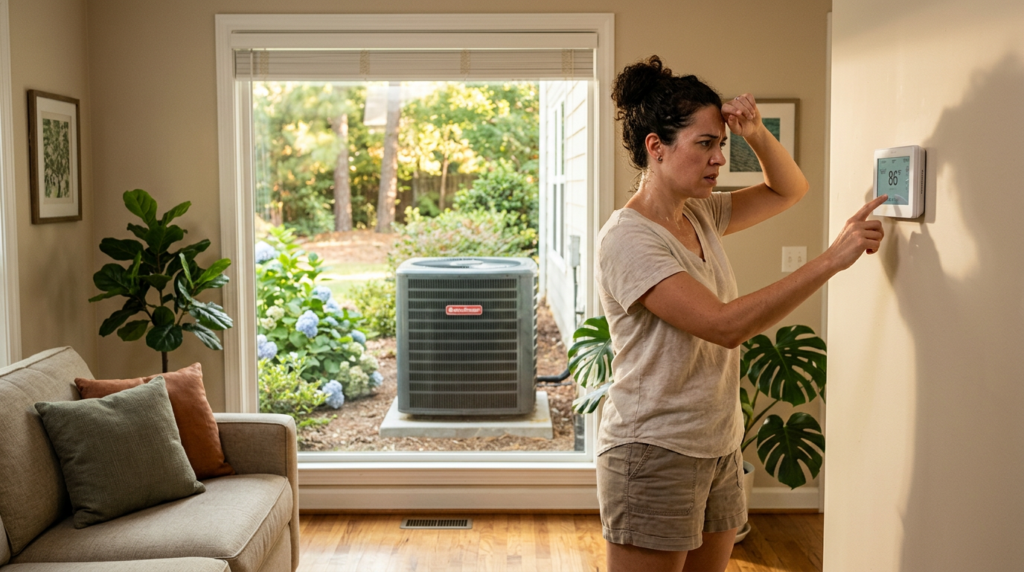
When your home starts feeling like a sauna despite the air conditioning running full blast, your first instinct might be to fear a total system failure. In many cases, the culprit is low refrigerant—commonly referred to by the brand name Freon—but simply adding more isn’t always the answer. Understanding the difference between a dirty filter and a costly leak can save you hundreds on unnecessary service calls and prevent long-term damage to your equipment.
Is Your AC Showing the Classic Symptoms of Low Refrigerant?
The refrigerant in your air conditioner is the lifeblood of the cooling process. It circulates between the indoor and outdoor units, absorbing heat from your home’s air and releasing it outside. When this substance is missing or low, the entire heat exchange process breaks down, leading to several unmistakable symptoms that every homeowner should recognize.
Blowing Warm or Lukewarm Air
The most obvious sign of a problem is air coming from the supply vents that feels room temperature rather than chilled. If your thermostat is set to 72 degrees but the air hitting your face feels like a mild breeze on a spring day, the system isn’t doing its job. You should check if the air is consistently warm or if the temperature fluctuates throughout the day.
Fluctuating temperatures often indicate that the compressor is struggling to reach the set point because it lacks the thermal mass of refrigerant to move heat effectively. To understand the physics behind this, you can look into the role of Freon in cooling which explains why heat transfer fails without proper pressure. Without the correct volume of gas, the evaporator coil cannot get cold enough to lower the temperature of the air passing over it.
Ice Buildup on the Evaporator Coil or Copper Lines
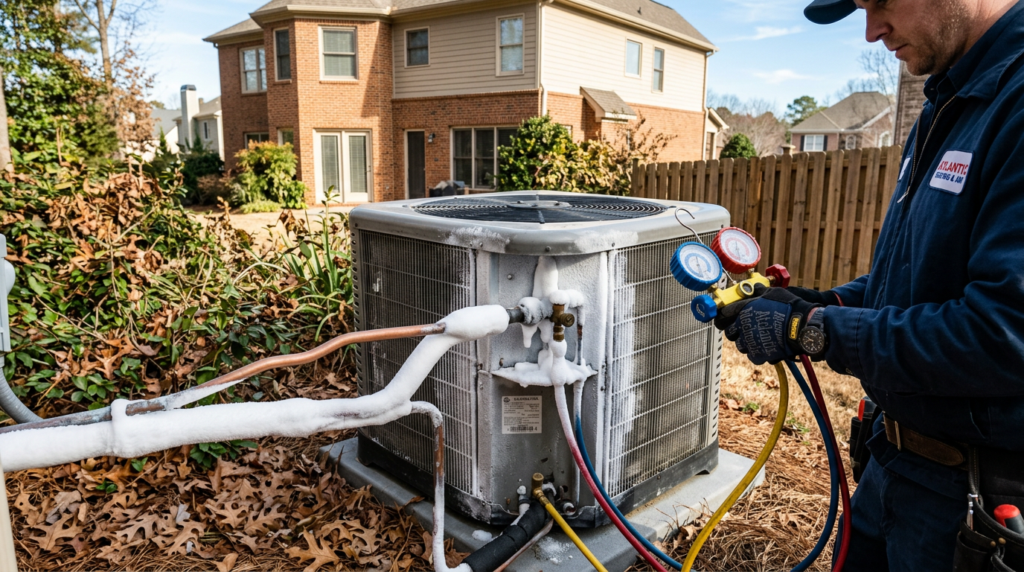
It may seem counterintuitive that a system that isn’t cooling your house would be covered in ice, but this is a hallmark of low refrigerant. When refrigerant levels drop, the pressure inside the evaporator coil also drops. According to the laws of thermodynamics, lower pressure leads to lower temperatures, often causing the coil to dip well below the freezing point of 32 degrees Fahrenheit.
As the humid air from your home passes over these sub-freezing coils, the moisture instantly turns into frost and eventually a thick block of ice. This ice can migrate out of the indoor air handler and travel along the copper line set all the way to the outdoor unit. If you see ice, turn the system off immediately; do not attempt to scrape it off, as you might puncture the delicate aluminum fins or copper tubing.
Hissing or Bubbling Noises Near the Unit
Your air conditioner is a closed-loop system, meaning it should never “consume” or “use up” refrigerant like a car uses gasoline. If the levels are low, it is because there is a physical hole somewhere in the lines. A hissing sound typically indicates a high-pressure gaseous leak where the refrigerant is escaping into the atmosphere.
Conversely, a bubbling sound often points to a leak in the liquid line where air has introduced itself into the sealed system, creating a “glug-glug” effect. These sounds provide evidence of a leak, as residential AC units should never consume refrigerant during their normal operation. If you hear these noises, the leak is likely significant and requires immediate professional attention.
How Can You Use the “Beer Can Cold” and Delta T Tests at Home?
While you shouldn’t attempt to handle refrigerant yourself, there are a few “old school” and scientific DIY tests you can perform to confirm your suspicions before calling a technician. These methods help you provide better information to a repair service, potentially speeding up the diagnostic process.
The Beer Can Cold Touch Test
The “Beer Can Cold” test is a classic field diagnostic used by technicians for decades. To perform this, locate the “suction line” on your outdoor unit—this is the larger of the two copper pipes, and it should be covered in black foam insulation. Safely feel the uninsulated portion of the brass valve where the pipe enters the condenser unit.
In a properly charged and functioning system, this valve should feel as cold and sweaty as a beer can pulled directly from an icy cooler. If the line feels warm to the touch, or only slightly cool, it is a strong field indicator of low refrigerant or perhaps a failing expansion valve. It tells you that the refrigerant returning from the house hasn’t absorbed the heat it was supposed to, or there simply isn’t enough of it to maintain the correct temperature.
Measuring the Delta T Temperature Split
For a more data-driven approach, you can measure the “Delta T,” which is the temperature difference between the air entering your system and the air leaving it. Use an infrared or probe thermometer to measure the air temperature at the return vent (where the filter is) and then at the supply vent closest to the AC unit.
Calculate the difference between these two numbers. An efficient, well-charged system should have a Delta T of 16 to 20 degrees Fahrenheit. If your split is only 10 to 13 degrees, you are likely dealing with a low refrigerant charge or a significant airflow restriction. This simple math can confirm that the system is underperforming even if it feels “mostly okay” to your hand.
Static Pressure and PT Charts for the Tech-Savvy
If you are particularly mechanically inclined, you might be interested in how professionals use Pressure-Temperature (PT) charts to check a system. These charts allow a technician to compare the ambient outdoor temperature to the static pressure inside the lines when the unit is turned off. This helps them determine if the refrigerant has reached its saturation point.
By analyzing these variables, a pro can differentiate between a low charge and a mechanical failure. For instance, a system might have plenty of refrigerant but still fail to cool because of a stuck expansion valve which regulates the flow of the liquid. Understanding these nuances is why professional diagnostics are often more reliable than DIY guesswork.
Is it a Low Freon Charge or Just a Dirty Air Filter?
Before you assume the worst, it is important to rule out simple maintenance issues. Many of the symptoms of low Freon are identical to the symptoms of a neglected air filter. A diagnostic flowchart can help you determine if you need a new filter or a professional repair.
The Diagnostic Flowchart for Homeowners
The first step in any HVAC troubleshooting process is checking the air filter. A clogged filter restricts airflow, which prevents the refrigerant from absorbing heat. This leads to the same frozen coils and warm air mentioned earlier. Before searching for ac repair services, replace your filter and wait two hours to see if the cooling improves.
Additionally, ensure all supply vents in your home are open and that the outdoor condenser unit isn’t buried under grass clippings, leaves, or mulch. If the filter is brand new and the outdoor unit is clear of debris, but your Delta T temperature split is still low, the issue is almost certainly a refrigerant leak that needs professional intervention.
Higher Utility Bills and Constant Cycling
A system low on refrigerant has to work twice as hard to achieve the same cooling results. It will run much longer cycles to try and meet the thermostat’s demand, which often results in a constantly running AC. This extra work shows up quickly on your monthly power bill.
Take a moment to compare your current month’s utility bill to the same month from the previous year. A 20-30% spike in energy usage without a significant heatwave is a major red flag for mechanical inefficiency. These long run times eventually lead to “short cycling,” where the system turns on and off rapidly, putting immense strain on the expensive compressor motor.
Automotive vs Residential Sign Differences
It is worth noting that homeowners often get confused by following DIY advice meant for cars. In an automotive AC system, a low charge often prevents the AC clutch from engaging at all because the system only holds about 16-20 ounces of refrigerant. The car protects itself by shutting down early.
Residential systems, however, have much higher capacities and often lack the same “low-pressure cut-off” sensitivity found in vehicles. This means a home AC will continue to run even when the charge is dangerously low, allowing the components to grind away until the compressor eventually dies. This fundamental difference is why you should never apply car-specific DIY tricks to your home’s HVAC system.
What Are the Risks of Ignoring a Refrigerant Leak?
Some homeowners choose to ignore the signs of a leak, thinking they can just “tough it out” through the summer. This is a dangerous gamble that usually ends in a much larger repair bill. Refrigerant is not just for your comfort; it is vital for the health of the machine itself.
The Danger of Compressor Burnout
Many people don’t realize that the refrigerant gas actually cools the compressor motor as it flows back to the outdoor unit. When the system is low on Freon, the compressor runs hotter than it was designed to. This heat can cause the internal oil to break down and become acidic.
This leads to a “burnout,” an catastrophic event where the motor fails and contaminates the entire copper line set with acid. Ignoring a relatively simple $500 leak repair today can easily lead to a $5,000 full system replacement tomorrow. Once the compressor burns out, the system is usually considered a total loss.
The Top-Off vs Leak Search Dilemma
When a technician arrives, many homeowners ask for a simple “top-off” to get through the month. However, HVAC professionals warn that this is merely a temporary band-aid on a permanent problem. Because the system is sealed, any loss of refrigerant means there is a physical hole that will only get larger over time.
Furthermore, there are environmental and legal implications to consider. The EPA has strict guidelines regarding refrigerant leaks and the intentional venting of these gases into the atmosphere. Simply adding more gas without fixing the source of the leak is often considered poor practice and, in some commercial cases, illegal.
R22 vs R410A Cost Implications
The type of refrigerant your system uses will dictate the cost of the repair. Older units manufactured before 2010 typically use R22, which has been phased out by the EPA due to its ozone-depleting properties. Because it is no longer produced, the price of R22 has skyrocketed.
For homeowners requiring ac repair in Atlanta or those looking for ac repair in Marietta, the cost of a few pounds of R22 can sometimes equal the down payment on a brand-new, high-efficiency unit. In these scenarios, technicians almost always recommend a full system replacement rather than sinking money into an obsolete refrigerant.
Why Should You Call a Professional for Refrigerant Issues?
While DIY culture is great for painting a room or fixing a leaky sink, refrigerant handling is strictly a professional task. It requires specialized education, expensive tools, and federal certification to ensure the job is done safely and correctly.
Specialized Tools and EPA Certification
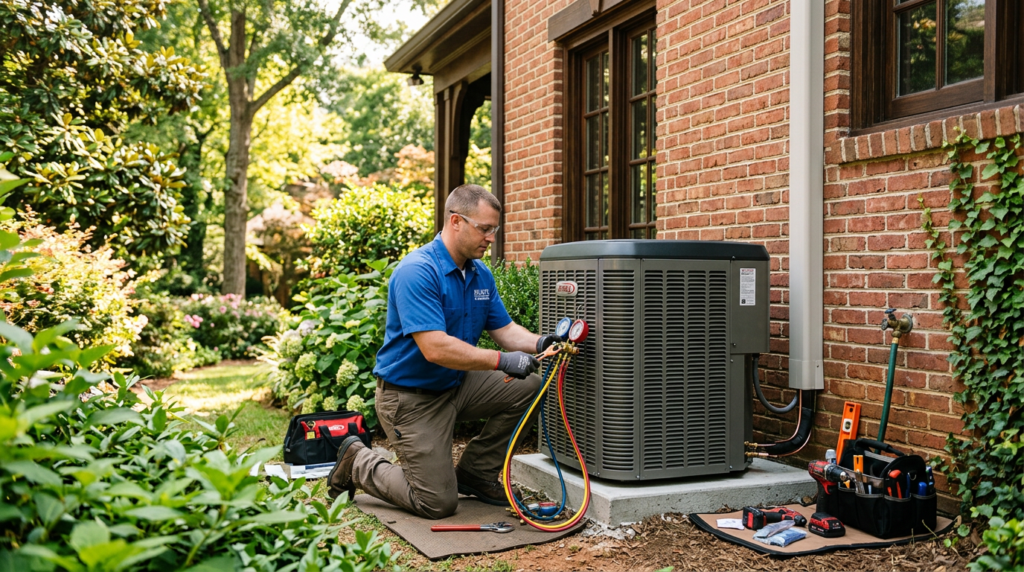
Handling refrigerant requires an EPA Section 608 certification because these chemicals are potent greenhouse gases and can pose potential health risks if inhaled or handled improperly. Professionals carry manifold gauges, electronic leak detectors, and micron gauges that the average homeowner simply doesn’t have in their garage.
Attempting to “DIY” a charge by guessing the amount of gas needed often leads to overcharging the system. An overcharged AC is just as damaging as an undercharged one, as it can cause liquid refrigerant to enter the compressor, leading to immediate mechanical failure. To better understand these components, you can review the complete HVAC troubleshooting guide for more information.
Finding the Source of the Leak
A professional doesn’t just add gas; they find the hole. Technicians use nitrogen isolation tests or UV dyes to find exact microscopic leaks in the evaporator or condenser coils. Common leak points include the “Schrader valves”—which look like the valves on a bicycle tire—or copper joints where vibrations have caused the metal to rub thin over time.
Knowing whether to patch a small leak or replace an entire coil is a nuance that requires hvac-r 101 training and years of experience. A pro can tell you if a repair is a sustainable long-term solution or if you are throwing money away on a failing component. Technicians can also provide ac refrigerant leak tips to help stabilize your system until a permanent repair is made.
Localized Service and Fast Response
When the Georgia heat hits triple digits, a broken AC isn’t just an inconvenience; it can be a health hazard. This is when you need emergency ac repair to prevent heat stroke and protect your home from humidity-induced mold growth. Local teams understand the specific challenges of the regional climate.
Specialized teams providing ac repair in Alpharetta are familiar with the high-demand cycles of local homes. Whether you are in a suburban neighborhood or a rural area, a rapid response ensures that your compressor doesn’t reach the point of no return, saving you from a much larger financial headache.
Should You Repair the Leak or Replace Your AC System?
Deciding between a repair and a replacement often comes down to the “50% Rule.” If the cost of the refrigerant and the leak repair exceeds half the value of the entire system—especially on a unit older than 10 years—it is usually time to invest in a new installation. Modern units are significantly more efficient and use safer, more affordable refrigerants.
Maintaining a sealed, properly charged system is the single best way to ensure home comfort and equipment longevity. If you suspect your system is struggling, don’t wait for it to fail completely. A proactive check-up can identify small leaks before they destroy your compressor.
Don’t Let a Small Leak Turn Into a Total System Failure
To recap, the key signs of low refrigerant are warm air from the vents, ice buildup on the coils, and a failing “Beer Can Cold” test. Remember that refrigerant is a “holding charge”—it is never consumed by the machine. If your levels are low, there is a physical hole in your system that requires professional attention to fix correctly.
Taking action early is the difference between a minor service call and a total system replacement. If you’ve noticed your energy bills climbing or your home feeling uncomfortably humid, it’s time to act. We encourage you to schedule a refrigerant level check and maintenance visit today to ensure your home stays cool all summer long.
*
Frequently Asked Questions (FAQs)
How much does it cost to add Freon to an AC unit? Costs vary significantly based on the type of refrigerant (R22 vs. R410A) and the volume needed. Generally, you can expect to pay a service call fee plus a per-pound rate for the gas. R22 is much more expensive than the modern R410A.
Can I add Freon to my home AC myself? No. It is illegal in the United States to purchase or handle most residential refrigerants without EPA Section 608 certification. Furthermore, there are high safety risks, including the potential for frostbite and dangerous inhalation hazards.
How long should an AC charge last? In a perfectly sealed system, the refrigerant charge should last the entire lifespan of the unit, which is typically 15 to 20 years. Any need to add refrigerant is a clear indicator of a mechanical failure or corrosion that must be addressed.
Will low Freon cause my AC to freeze up? Yes. Lower pressure inside the coils leads to lower temperatures. When the coil drops below freezing, the condensation from your home’s air turns into ice, which eventually blocks all airflow and stops the cooling process.
What is the most common place for a refrigerant leak? The evaporator coil is the most frequent culprit due to “formicary corrosion” caused by household cleaners and pollutants. However, regular maintenance can often identify weak points in service valves or joints before they lead to a total system shutdown.