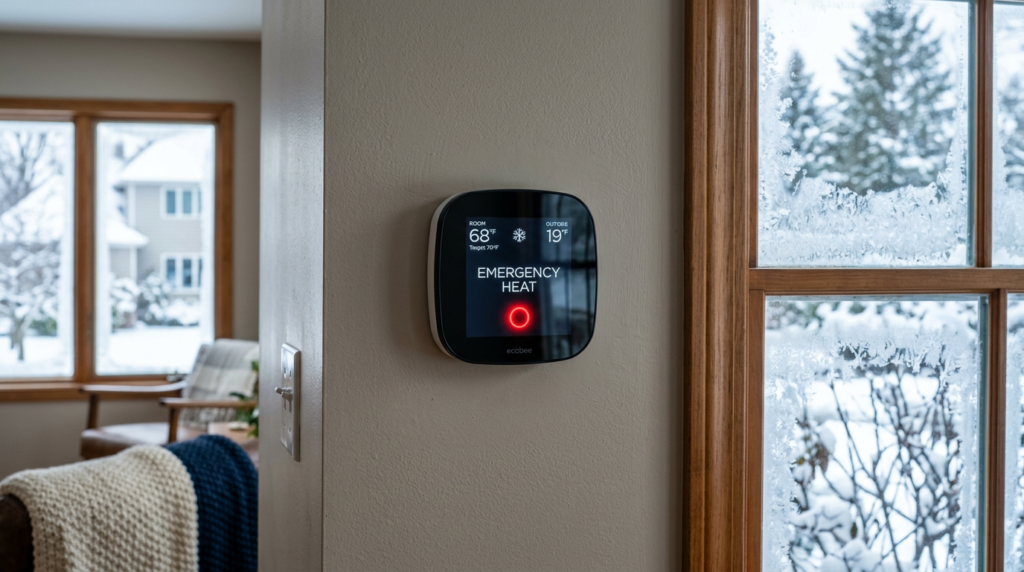
When temperatures drop into the 20s in Atlanta or Marietta, many homeowners panic seeing “Auxiliary Heat” or “EM Heat” flicker on their thermostats. While Georgia winters are usually mild, knowing when to manually flip that switch—and when to avoid it—can save you hundreds of dollars on your next electric bill. This guide covers everything from frozen condensate lines to the real cost of electric heat strips in the Peach State.
What is the Difference Between Auxiliary Heat and Emergency Heat?
Understanding Heat Pump Staging
The first thing to understand is that your heating system operates in “stages” to balance comfort with energy consumption. Auxiliary heat is an automatic feature where your system supplements the heat pump when it can’t keep up with the cold on its own. It is a secondary stage of heat that kicks in when the temperature differential between your thermostat setting and the room temperature is too wide.
Emergency heat, on the other hand, is a manual setting that completely shuts off the outdoor compressor, relying 100% on secondary heat. When you flip this switch, you are telling the system to ignore the efficient outdoor unit entirely. In Georgia, most systems use electric resistance strips or a gas furnace as the secondary source to provide this warmth.
The Mechanical Role of the Outdoor Compressor
Your heat pump extracts heat from the outside air, even when it feels cold to you, using a refrigeration cycle. Auxiliary heat turns on temporarily during the “defrost cycle” to keep the air coming out of your vents warm while the outdoor unit melts ice off its coils. This is a normal part of operation and does not require any intervention from the homeowner.
Some homeowners mistakenly believe that only heat and cool mode on controls indicates a system failure, but many modern smart thermostats manage these transitions automatically without a dedicated manual button. Switching to EM heat stops the extraction process entirely, which is only necessary if the outdoor unit is physically damaged or failing.
Georgia Residential Energy Code Standards
Local georgia residential energy codes dictate how systems are staged for maximum efficiency to ensure residents aren’t overpaying for power. These codes require specific configurations that prevent the heat strips from running unnecessarily when the outdoor temperature is still high enough for the heat pump to work.
Modern thermostats are often misconfigured with the wrong “Compressor Min Outdoor Temp,” causing unnecessary EM heat usage during mild freezes. Understanding these settings prevents your system from over-relying on expensive backup heat during a typical 35°F Georgia morning. If your system is properly commissioned, the transition to auxiliary heat should be seamless and automatic.
When Should You Manually Switch to Emergency Heat?
Physical Damage from Georgia Ice Storms
You should use EM heat if freezing rain has locked the fan blades in place; running the motor while frozen can cause permanent damage to the motor windings. If you wake up to a thick layer of glaze ice over your unit, it is safer to run the emergency heat while the ice melts. A pro-tip for locals is to use a $5 tarp to cover the top of the unit during ice storms to prevent heavy ice accumulation on the fan.
If you hear loud grinding or metal-on-metal sounds coming from the outdoor cabinet, switch to EM heat immediately and schedule a heat pump repair. These sounds often indicate a failing fan motor or a broken compressor mount. Running the system in this state could turn a minor repair into a total system replacement.
Total System Failure in Freezing Temps
If your home temperature is dropping rapidly and the outdoor unit isn’t running at all, EM heat is your temporary lifeline. This setting ensures your pipes don’t freeze while you wait for emergency heating repair during a cold snap. It is better to pay for a few days of high electric bills than to deal with the aftermath of a burst water pipe.
Before you commit to long-term EM heat use, check for a tripped breaker in your main electrical panel. The compressor and the indoor heat strips often run on separate circuits, so one may be powered while the other is dead. If the outdoor breaker keeps tripping, leave it off and stay in emergency mode until a technician arrives.
Dealing with Frozen Condensate Lines
A common Georgia failure point is a frozen drain line that causes the system to shut down for safety. When the moisture removed from the air cannot drain away, a float switch will kill power to the outdoor unit to prevent a flood. You can often avoid long-term EM heat use by using a turkey baster to pour warm water or vinegar down the line to clear the ice.
If the line remains frozen due to its location in a crawlspace or north-facing wall, EM heat will keep you warm until the afternoon sun thaws the exterior PVC. Once the ice melts and the water drains, the outdoor unit should resume normal operation. If this happens frequently, you may need to have your drain line insulated or re-routed.
Why is Emergency Heat So Expensive for Georgia Homeowners?
The High Cost of Electric Resistance Strips
Electric heat strips are essentially a giant toaster in your ductwork; they use significantly more kWh than a heat pump. While a heat pump “moves” heat from one place to another, resistance strips must “create” it using pure electricity. In Georgia, running EM heat can cost 3 to 4 times more per hour than your standard heat pump cycle.
The financial impact of this efficiency gap is significant over the course of a billing cycle. You can review this hvac cost in Atlanta guide to see how heating choices impact long-term ownership costs and utility budgets. For most homeowners, the goal is to keep these strips off for as much of the winter as possible.
Dual Fuel Systems: Gas vs. Electric
Many homes in Alpharetta and Sandy Springs use “Dual Fuel” systems with a gas furnace backup instead of electric strips. In Georgia, natural gas is often cheaper per unit of energy than electric strips during extreme cold snaps. If your system is dual fuel, the “Auxiliary” stage will be your furnace, which provides much hotter air at the vents.
If you have a gas backup, “Emergency Heat” is less of a financial burden than it is for those with all-electric systems. However, it still bypasses the heat pump, which is usually the most efficient option when temperatures are above 35°F. Dual fuel systems are highly recommended for North Georgia because they offer the best of both worlds.
Impact on Your Georgia Power or EMC Bill
A single weekend of running EM heat can result in a monthly bill spike of $100 or more depending on your home’s insulation. Local utilities often have “peak demand” pricing where they charge more for electricity during the coldest hours of the morning. EM heat hits these peaks hard, as the strips draw a massive amount of amperage all at once.
Monitoring your thermostat staging is the best way to keep your emergency heating repair in Atlanta costs from spiraling out of control. Many smart thermostats now provide monthly energy reports that show exactly how many hours your system spent in “Stage 2” or “Emergency” mode. Use this data to adjust your habits and save money.
How Can You Troubleshoot Your System Before Switching?
Checking the Outdoor Unit for Ice Buildup
A thin coating of white frost on the outdoor coils is normal and will be handled by the automatic defrost cycle every 30 to 90 minutes. However, if the unit is encased in a solid block of ice, it cannot breathe and will require a manual thaw or professional service. Heavy ice buildup is often a sign of a bad defrost board or a low refrigerant charge.
Ensure no gutters are leaking directly onto the unit from the roofline, as this creates artificial ice dams that trigger the need for EM heat. If you see water dripping from your eaves onto the fan, you need to repair the gutter immediately. This external water source can freeze the fan blades solid even when the heat pump is working perfectly.
Thermostat Configuration and Staging
Homeowners on various forums often report that “Compressor Min Outdoor Temp” settings are set too high by default by installers. If this is set to 40°F, your heat pump will shut off and go into emergency mode even when it could still be heating your home efficiently. Check your thermostat manual to see if you can lower this lockout temperature to 30°F or 25°F.
If you suspect a configuration error, you can schedule a heat pump installation consultation to optimize your settings for the local climate. Ensure your thermostat isn’t set to jump to EM heat just because you raised the temperature by more than 2 degrees. This is a common feature on older thermostats designed to get the house warm quickly, but it is incredibly inefficient.
Simple Fixes for Common Failures
Before you flip that emergency switch, change your air filter; restricted airflow is a leading cause of “Auxiliary Heat” staying on too long. If the indoor coil can’t get enough air, it can’t transfer the heat from the refrigerant, forcing the backup strips to do the work. A clean filter is the cheapest way to improve your system’s performance.
Clear debris, leaves, and pine needles from around the base of your outdoor unit to improve heat transfer and drainage. You should also follow georgia southern’s weather readiness tips to prepare your home’s exterior before the cold hits. Simple maintenance like clearing the area around your HVAC unit can prevent a system shutdown during a storm.
Where Can You Get Help for Heating Emergencies in Georgia?
Local Service Areas for Fast Response
When your heat goes out in the middle of a Georgia freeze, you need someone who knows the local neighborhoods and common housing styles. We provide specialized heat pump repair in Marietta and heat pump repair in Roswell to ensure you aren’t left in the cold. Our technicians carry the most common parts for heat pumps used in our region.
Residents in Lawrenceville can also access our heat pump repair in Lawrenceville team for 24/7 support during extreme weather events. Fast response is critical when your system is stuck in EM heat and your bills are climbing. We prioritize calls where the primary heat source has failed completely.
When to Call a Professional
If your “Aux” or “Heat On” light stays on when it is above 40°F outside, your system likely has a refrigerant leak or a failing sensor. The system is struggling to find heat where it should be plentiful, forcing the backup strips to run. This is not normal behavior for a healthy heat pump in Georgia’s relatively mild climate.
If the EM heat itself doesn’t feel warm, your heat strips may have burnt out, leaving you with no backup at all. This is a dangerous situation during a hard freeze. Professional technicians can verify if your heat pump generation is suitable for the Georgia climate or if an upgrade to a high-efficiency model is needed.
Safety and Preparedness Resources
If your system fails entirely, consult the georgia oci safety tips for using space heaters as an alternative to EM heat. Never use a gas oven to heat your home, and ensure space heaters are kept at least three feet away from curtains or furniture. Safety should always be your first priority when the HVAC system is down.
For those facing prolonged outages or extreme conditions, check the be ready bryan county resources which offer excellent advice for all Georgia residents on emergency kits. Staying informed through local government portals can help you decide when it is time to seek a warming center. You can also keep a copy of the north georgia tech emergency response guide for household safety protocols during winter weather events.
Is Emergency Heat the Right Choice for Your Home Today?
Summary of Best Practices
Only use EM heat if the outdoor unit is physically broken, making strange noises, or encased in thick ice that won’t melt. Avoid using the EM heat setting just to “warm the house up faster,” as it provides no speed benefit over the automatic Aux heat but costs much more. The “Emergency” setting is a binary switch: it is for emergencies only.
If you are unsure whether your system is behaving normally, contact our heat pump repair in Alpharetta team. We can walk you through a quick phone diagnostic to see if you need a service visit or if your system is just doing its job during a cold snap.
Long-Term Efficiency Planning
If your system struggles every time the temperature hits 35°F, it may be an older generation model that isn’t optimized for modern efficiency standards. Newer “Cold Climate” heat pumps can handle Georgia winters down to 5°F without ever needing the EM heat switch. Upgrading your unit can pay for itself in utility savings over just a few seasons.
Schedule a maintenance visit every fall to ensure your sensors, defrost boards, and drain lines are ready for the next freeze. A technician can check the “heat strip sequencer” to make sure your backup heat is only coming on when it is actually needed. Preventive care is the best way to avoid the “Emergency” switch altogether.
Final Verdict for Georgia Homeowners
Georgia’s humidity and sudden freezes make heat pump maintenance unique compared to northern states. Our systems have to work harder to manage moisture, which leads to more frequent defrost cycles and potential ice issues. Understanding the difference between “Aux” and “EM” heat is the first step toward becoming a savvy Georgia homeowner.
Trust your system’s “Auxiliary” mode to do its job, and only reach for the “Emergency” switch when a true mechanical failure occurs. By keeping an eye on your outdoor unit and maintaining your filters, you can stay warm and safe while keeping those utility bills under control. Use EM heat sparingly, and always call a professional if your system stays in backup mode for more than 24 hours.