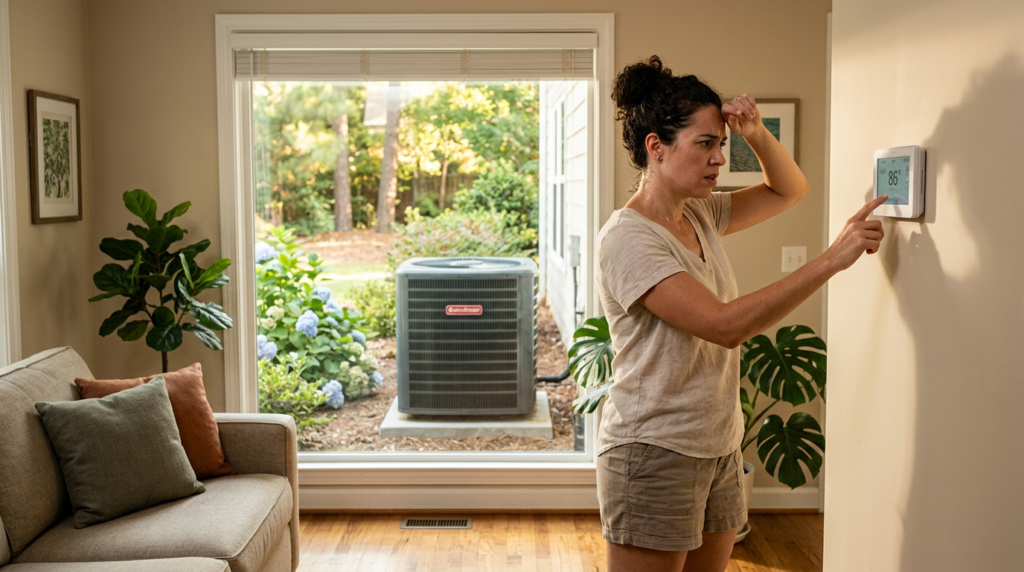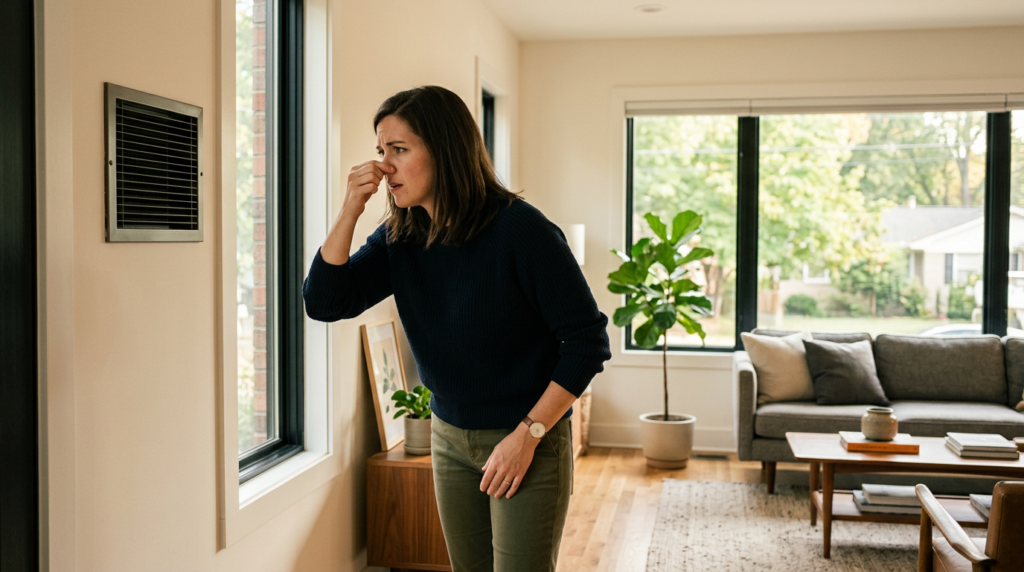
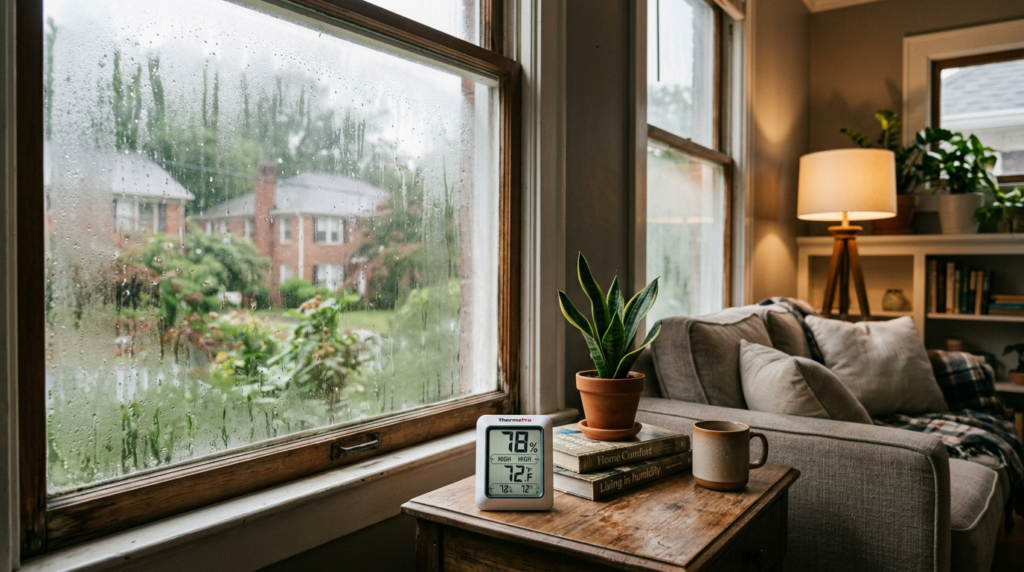
Living in Atlanta means battling a subtropical climate where 68% average humidity is the norm, but your home should be a sanctuary, not a sauna. If you’re noticing musty smells, foggy windows, or a persistent “sticky” feeling despite running the AC, your home’s moisture management system is failing.
This guide breaks down the technical reasons for indoor humidity spikes in Georgia and provides actionable solutions to reclaim your comfort. Whether you are dealing with the heavy air of July or the damp chill of a rainy October, understanding how moisture in the home is handled by your structure is the first step toward a healthier living environment.
Why Does My Atlanta Home Feel Sticky Even When the AC is Running?
The Science of Psychrometrics for Homeowners
To understand why your home feels like a locker room, we have to look at psychrometrics—the study of gas-vapor mixtures. Humidity is relative; 60% relative humidity at 70°F contains much less actual water than 60% at 80°F because warmer air has a higher capacity to hold moisture.
Many homeowners try to fix a “sticky” room by cranking down the thermostat, but this can backfire. As the air temperature drops without sufficient moisture removal, the relative humidity actually climbs, making the air feel even more damp and clammy. This phenomenon is why relative humidity building science emphasizes the importance of managing the “latent load”—the moisture in the air—rather than just the “sensible load,” which is the temperature you see on the dial.
The Dangers of Oversized HVAC Systems
In the world of Georgia cooling, “bigger is not better.” An oversized air conditioner cools a home so quickly that it “short-cycles,” turning off before the evaporator coil has a chance to stay cold long enough to pull water out of the air.
When you plan an ac installation in Atlanta, it is critical that your contractor performs a Manual J load calculation to ensure the unit is sized perfectly for your square footage and insulation levels. An oversized unit leaves gallons of water suspended in the air while the air temperature remains cool, leading to that dreaded “cold and damp” feeling.
Thermostat Settings and the Fan Myth
A common mistake is setting the HVAC fan to the “On” position instead of “Auto.” While you might think this improves circulation, it actually pulls moisture right off the wet evaporator coil and blows it back into your living space before it can drain away.
Modern smart thermostats can help, but they must be calibrated correctly for the Georgia climate. If the fan runs constantly, you are essentially re-humidifying your home every time the compressor cycles off, defeating the purpose of your cooling system.
What Is the “Shoulder Season” Humidity Trap?
High Humidity Without the Heat
Atlanta homeowners often face a unique struggle during the “shoulder seasons”—those rainy days in April or October when it is 68 degrees outside with 90% humidity. Because the outdoor temperature is mild, your air conditioner doesn’t need to run to keep the house at 70 degrees.
Since the AC isn’t running to manage the temperature, it never activates to remove moisture. This creates a “19-gallon reality check,” where a standard family home can pull an incredible volume of water from the air in a single damp week, leading to warped floorboards and musty closets even when it isn’t “hot” outside.
Supplemental Dehumidification Solutions
For many, the best way to bridge this gap is through the use of HVAC in Atlanta systems that include integrated whole-home dehumidifiers. These units operate independently of the cooling cycle, meaning they can pull moisture out of the air on a 65-degree rainy day without making your house feel like an icebox.
While portable “bucket” units are popular, they rarely have the capacity to manage the open floor plans common in modern Georgia homes. According to a review on minimizing moisture problems in hot, humid climates, a dedicated whole-home unit is often more cost-effective over time than upgrading to a massive variable-speed AC unit, as it targets the moisture problem directly at the source.
DIY Humidity Monitoring and Data
Before investing in major equipment, start by tracking the data. Using a simple hygrometer to monitor different rooms can help you identify “micro-climates” where humidity may spike due to poor airflow or proximity to a damp basement.
Tracking these trends allows you to see if your humidity issues are constant or if they only occur during specific times of day, such as after a heavy afternoon thunderstorm. This data is invaluable when you eventually consult with a professional about your indoor air quality.
Is Your Crawl Space or Basement Making Your Living Space Humid?
The Stack Effect and Vertical Moisture Migration
Even if your upstairs feels dry, your crawl space might be the culprit behind your humidity woes. Through a process called the “stack effect,” warm air rises and escapes through your attic, creating a vacuum that pulls damp, cool air from the ground up through your floorboards and utility penetrations.
This vertical migration is often exacerbated by duct services in Atlanta that identify leaks in the floor-level ductwork. When your ducts leak in an unconditioned crawl space, they don’t just lose cool air; they actively suck in the Georgia swamp air and distribute it into your bedrooms.
The Myth of Foundation Fans vs. Vapor Barriers
Many older Atlanta homes rely on foundation fans to “dry out” the crawl space, but in a high-humidity environment, these fans often do more harm than good. They pull in 90% humidity air from the outside, which then condenses on your cool floor joists and insulation.
A better solution is a high-quality 20-mil vapor barrier. Standard 6-mil plastic is often too thin to stop water vapor diffusion over the long term; you need a true moisture barrier to manage the gaseous water that moves through the soil and into your home’s structure.
Post-Water Damage and Lingering Musty Smells
If your home has ever experienced a pipe leak or minor flooding, moisture can hide in porous materials like drywall and insulation for years. This hidden dampness feeds mold growth long after the initial puddle has been mopped up.
It is vital to address these issues because respiratory disease and damp indoor environments are closely linked in medical literature. If you smell a “sock-like” odor but can’t see water, the moisture is likely trapped within your walls or floor system.
How Can Air Sealing and Insulation Lower My Indoor Humidity?
Finding the Hidden Air Leaks
A “leaky” house is impossible to dehumidify because it is constantly “breathing” the humid outside air. Common culprits include recessed lighting cans, plumbing stacks, and the top plates of your walls in the attic.
By following an energy star guide for air sealing, you can plug these holes and keep the conditioned, dry air inside where it belongs. This reduces the workload on your HVAC system and stabilizes your indoor environment.
The Relationship Between Insulation and Condensation
Poor insulation doesn’t just make your house hot; it creates cold spots on your walls. When humid indoor air hits a cold, poorly insulated spot, it reaches its “dew point” and condenses into liquid water, leading to rot and mildew.
In the Atlanta climate zone, the placement of vapor retarders is critical. If you are noticing moisture issues, you may need an ac repair in Atlanta to fix secondary damage caused by condensation dripping onto electrical components or ceiling fans.
Ductwork Integrity and Pressure Imbalances
Leaky return ducts are a major source of humidity. If your return ducts are located in a hot, 130-degree attic and have even minor gaps, they will suck in that superheated, humid air and blow it directly into your living room.
Professional duct services use mastic—a thick, gooey paste—rather than traditional “duct tape” to seal these joints. This ensures that the only air your system is cooling is the air already inside your home, significantly improving your dehumidification efficiency.
Which Professional Fixes Are Best for Atlanta’s Climate?
Variable Speed and Inverter Technology
If you have a “bonus room” over a garage or a finished basement that always feels sticky, ductless mini-split services might be the answer. These systems use inverter technology to run at very low speeds for long periods, which is the gold standard for moisture removal.
Variable-speed blowers in central systems work similarly. Instead of blasting on and off, they gently move air over the cold coils for a longer duration, ensuring that every drop of humidity is squeezed out before the air reaches your vents.
Whole-Home Dehumidifiers vs. AC Upgrades
When deciding between a new AC or a dedicated dehumidifier, consider your specific needs. A dedicated unit like a Santa Fe or Aprilaire is often the only way to solve the “shoulder season” trap effectively.
According to research on how to get comfortable with dehumidification, dedicated units are significantly more efficient at removing water than standard AC units. This allows you to keep your home at a higher temperature while still feeling perfectly comfortable.
Maintenance and Professional Calibration
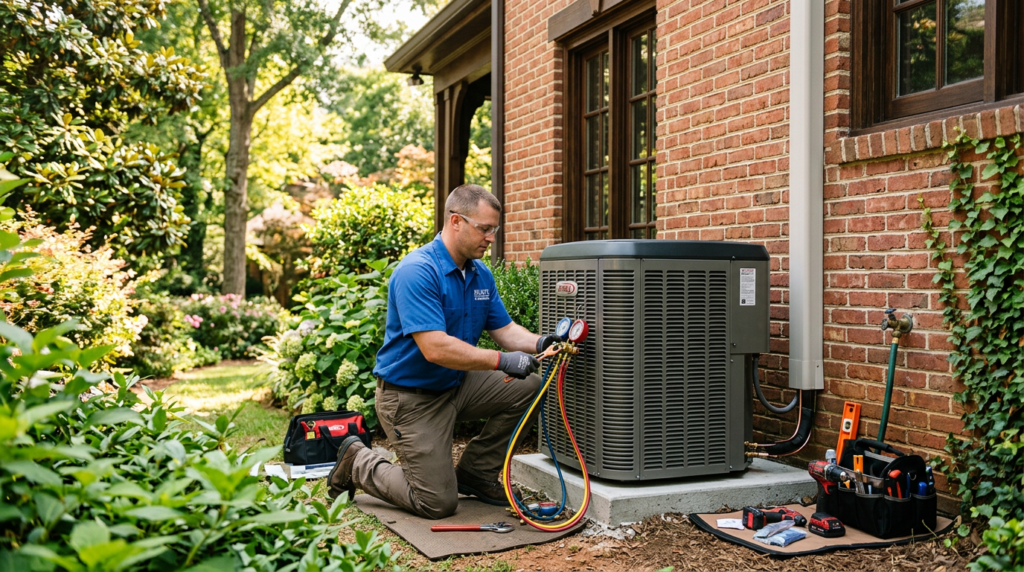
A dirty evaporator coil can’t remove moisture effectively. Dust acts as an insulator, preventing the refrigerant from cooling the air to its dew point. Regular ac repair and maintenance ensure that your refrigerant charge is precise; if it’s even slightly off, your system’s ability to dehumidify drops drastically.
Finally, always check your condensate drain lines. In the humid Georgia summer, these lines can easily clog with algae or “sludge.” If the water can’t drain out of the pan, it stays inside your air handler, adding more humidity back into the air stream.
Ready to Finally Dry Out Your Atlanta Home?
Summary of the Atlanta Humidity Solution
Solving the humidity puzzle in Atlanta requires a three-pronged approach: ensuring your HVAC is sized correctly, sealing your home’s envelope (especially the crawl space), and managing the moisture during mild weather. Start with a $20 hygrometer to see where your levels stand. If you are consistently above 60%, it is time to call a professional for a Manual J load calculation and a system evaluation.
Actionable Checklist for Homeowners
Immediate Low-Cost Fixes:
- Switch your thermostat fan setting to “Auto” to prevent moisture from blowing back into the house.
- Clean your condensate drain line with a cup of vinegar every few months to prevent clogs.
- Ensure your dryer vents and bathroom exhaust fans lead directly outside, not into the attic or crawl space.
Medium-Term Investments:
- Install a smart thermostat with “Overcool to Dehumidify” logic to help during rainy weeks.
- Use mastic or foil tape to seal any visible gaps in your ductwork located in the basement or attic.
Long-Term Solutions:
- Schedule a professional energy audit to find where the “Georgia swamp” is leaking into your home.
- When it’s time for a replacement, transition to variable-speed equipment or add a dedicated whole-home dehumidifier.
Frequently Asked Questions About Atlanta Humidity
What is the ideal indoor humidity level for Georgia?
The “sweet spot” for most Atlanta homes is between 45% and 55%. This range is high enough to prevent dry skin and static electricity but low enough to stop dust mites and mold from proliferating. Once you exceed 60%, you are in the danger zone for organic growth.
Why is my upstairs more humid than my downstairs?
Heat and moisture both rise. Through convection, the humid air in your home naturally migrates to the highest point. If you have a single-zone system, it often struggles to balance the “latent load” of a two-story home, leaving the upstairs feeling sticky even if the downstairs is chilly.
Can a dirty air filter cause high humidity?
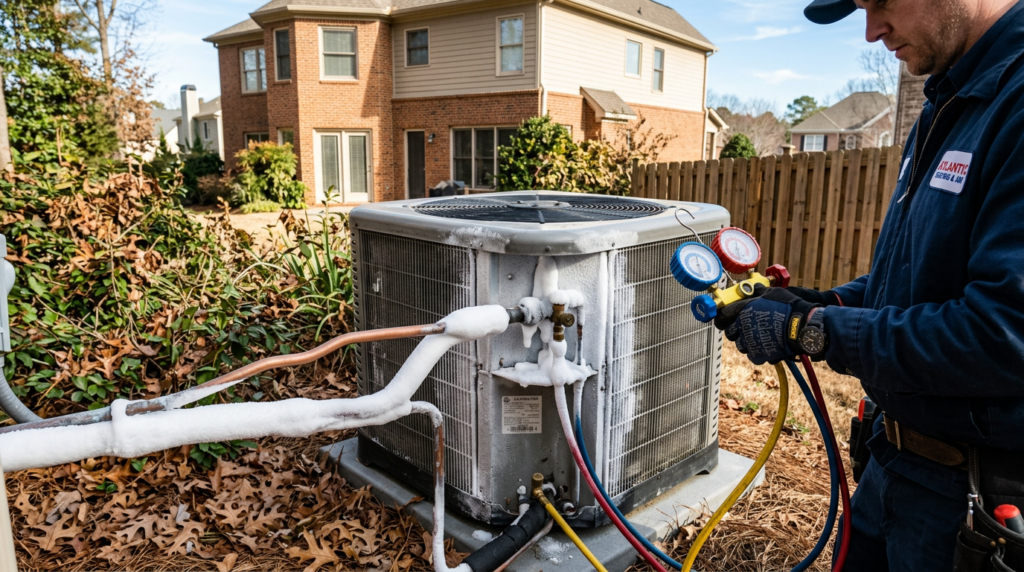
Yes. A clogged filter restricts airflow, which can cause the evaporator coil to get too cold and potentially freeze over. Even if it doesn’t freeze, the reduced airflow means the system isn’t processing enough air volume to remove the necessary amount of water, leaving your home damp.
Conclusion: Reclaiming Your Comfort
The Long-Term Benefits of Moisture Control
Controlling your home’s humidity is about more than just feeling “less sticky.” It is an investment in your property’s structural integrity. Excess moisture causes hardwood floors to cup, paint to peel, and drywall to soften. By maintaining a dry environment, you are protecting your biggest investment from the inside out.
Furthermore, your health and sleep quality will improve. Dust mites and mold thrive in high humidity; by drying out the air, you are removing the primary triggers for many common allergens. You will also find that you can save money on your power bill, as dry air at 74 degrees feels much cooler than humid air at 70 degrees.
Contact Your Local Atlanta HVAC Experts
Don’t let the Georgia humidity dictate your comfort. If you’re ready to transform your home from a sauna back into a sanctuary, it’s time to get a professional assessment. Our team can help you identify the root cause of your moisture issues and provide a tailored solution. Contact us today for a comprehensive system evaluation and moisture load calculation.